The Operations Research Behind Cross-Docking
Cross-docking cuts warehousing costs by moving goods directly from inbound to outbound trucks with minimal storage — but that speed depends on solving several scheduling and routing problems at once.


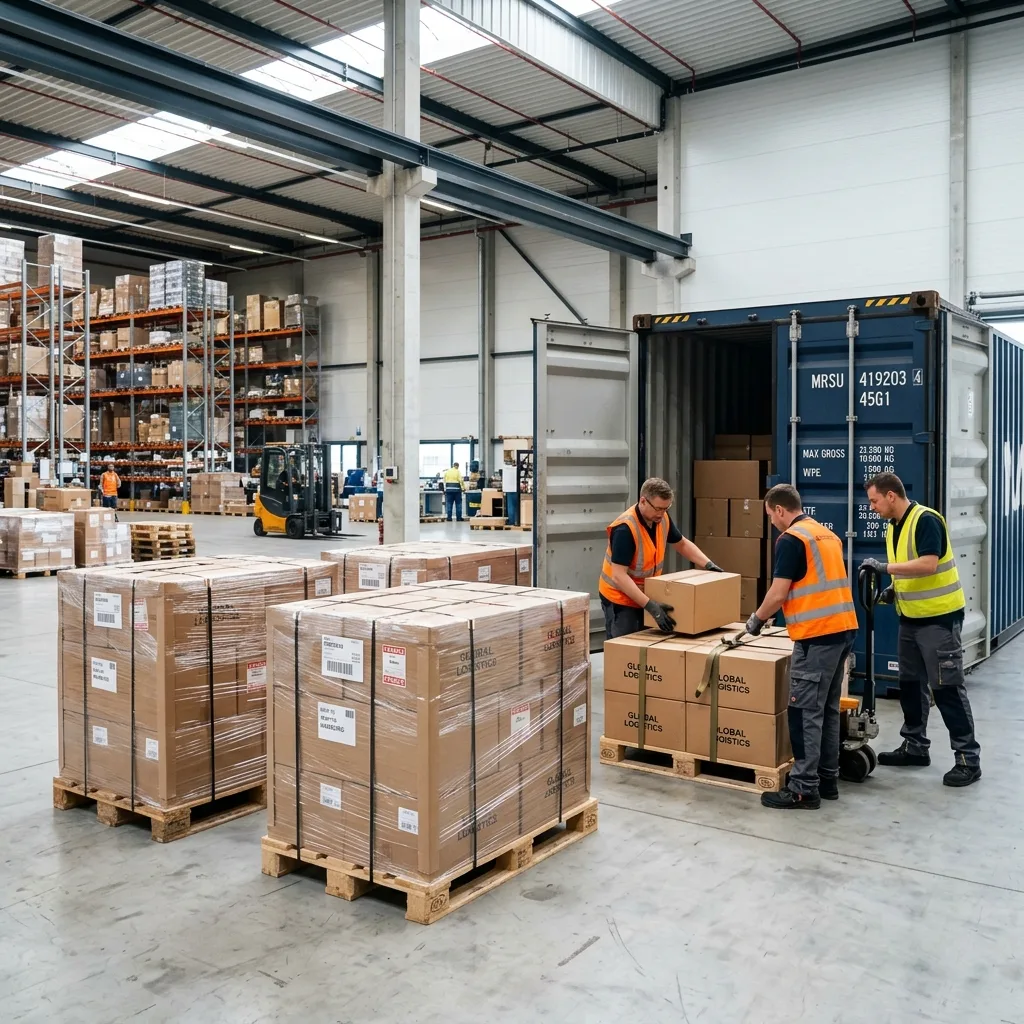
Cross-docking — transferring goods from inbound to outbound trucks with minimal handling or storage — reduces warehousing costs, lowers inventory levels, and speeds up delivery. Its efficiency, though, depends entirely on coordination: dock assignments, load schedules, internal routing, and real-time adjustments all have to work together, and a failure in any one of them can erode the time savings that make cross-docking worthwhile in the first place.
Cross-docking cuts warehousing costs by moving goods directly from inbound to outbound trucks with minimal storage — but that speed depends on solving several scheduling and routing problems at once.
§ 02Dock door assignment and load balancing
Assigning inbound and outbound trucks to dock doors directly determines how far goods travel inside the facility and how long trucks wait before being processed. Poor assignment creates congestion at some doors while others sit idle. Optimization models that account for truck arrival times, load types, and dock availability — and that adapt as conditions change — reduce both waiting time and internal travel distance, which compound across a facility handling hundreds of trucks per day.
Closely related is load balancing across docks: synchronising arrivals and departures so that no single dock's handling capacity is exceeded while others are underused. Treating dock assignment and load balancing as a joint scheduling problem, rather than two separate decisions, tends to produce noticeably better throughput than optimizing each in isolation.
§ 03Inventory visibility during transient storage
Even in a well-run cross-dock, some goods require brief temporary storage while awaiting their outbound truck. That transient inventory is easy to lose track of — and losing track of it is precisely what erodes the speed advantage cross-docking is meant to provide. Real-time tracking of goods as they move through the facility, paired with optimization of where transient items are placed and when they're retrieved, keeps that window as short as the operation requires.
§ 04Routing, sorting, and minimizing transfer time
Internal routing and sorting — getting each item to the correct outbound truck with minimal movement — becomes more complex as the volume of goods and number of destinations grow. Optimization models that account for incoming volumes, destination requirements, and truck schedules can determine efficient internal routes and automate sorting, which is where most of the time savings in cross-docking actually come from: not from the absence of storage, but from the elimination of unnecessary movement.
§ 05Adapting to real-time disruptions
Cross-docking's tight scheduling makes it sensitive to disruption — a delayed truck, equipment failure, or schedule change can cascade through dock assignments, load balancing, and routing all at once. Real-time monitoring that flags these disruptions as they happen, combined with the ability to re-optimize dock assignments and routing on the fly, is what keeps a cross-docking operation resilient rather than brittle under variable conditions.