Inside the Hospital: Scheduling Problems That Never Stop Moving
A hospital runs as a set of interlocking schedules — beds, staff, operating rooms, supplies, ambulances — where a change in one ripples into the others almost immediately.

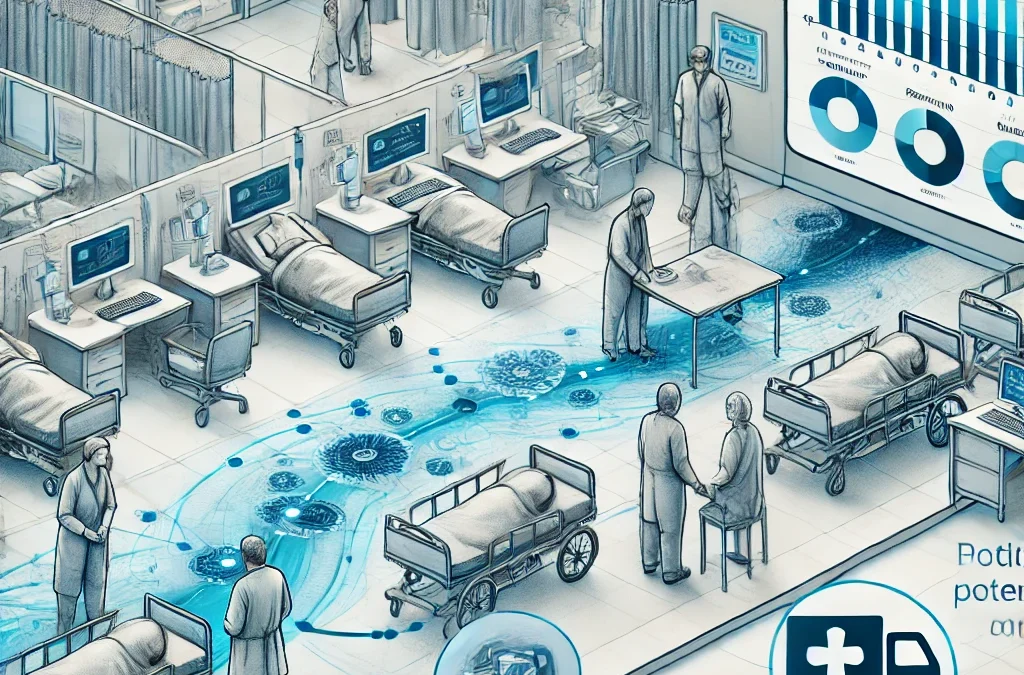
A hospital runs as a set of interlocking schedules — beds, staff, operating rooms, supplies, ambulances — where a change in one ripples into the others almost immediately. A delayed discharge holds a bed that an admitted patient needs; an unplanned surgery shifts an OR schedule that staffing was built around. Operations research has long treated these as separate problems, each with its own literature, but the operational reality is that they interact constantly, and the best gains often come from treating them as a connected system rather than isolated optimizations.
A hospital runs as a set of interlocking schedules — beds, staff, operating rooms, supplies, ambulances — where a change in one ripples into the others almost immediately.
§ 02Inventory that can't run out — or pile up
Hospitals hold inventory across a huge range of items — from low-cost consumables to expensive, perishable medications — each with different demand patterns, shelf lives, and consequences for running out. A stockout of a routine item is an inconvenience; a stockout of a critical medication during an emergency is a patient safety issue, which is why hospital inventory tends to run with more safety stock than a typical retail model would recommend. Forecasting that incorporates patient census trends, seasonal variation, and the shelf life of perishable items can tighten reorder points without increasing stockout risk, and automating the reorder decision removes a recurring manual task that is easy to get wrong under time pressure.
§ 03Matching staff to shifting patient load
Staffing a hospital means assigning people with specific certifications to shifts that have to satisfy legal limits on working hours, individual availability, and a patient load that is only partly predictable. Built well in advance, a schedule reflects historical patterns of patient inflow; built well in the moment, it has to absorb the inevitable deviations — a busier-than-expected night, a staff member calling in sick — without simply defaulting to overtime. The two pressures pull in different directions: too much slack in the schedule wastes labour budget, too little creates the conditions for burnout and, eventually, turnover, which is a far more expensive problem to fix.
§ 04Patient flow and operating room scheduling
Patient flow — the movement of patients from admission through treatment to discharge — and operating room scheduling are usually managed separately, but a delay in one is frequently the cause of a bottleneck in the other. An OR running over schedule holds a recovery bed that a downstream patient is waiting for; a ward that is full because discharges are running late can leave a completed surgery with nowhere to send the patient. Modeling bed availability, expected length of stay, and OR schedules together — rather than as independent constraints — makes it possible to anticipate these collisions before they happen, prioritizing the cases most likely to cause a backlog and adjusting discharge planning accordingly. Emergency cases, which by definition can't be scheduled in advance, still need a system that can absorb them without unraveling the rest of the day's plan.
§ 05Ambulance dispatch as a real-time routing problem
Ambulance dispatch is the most time-pressured logistics problem a hospital network touches: the difference between dispatching the nearest available unit and the nearest unit that happens to be free can be measured in minutes that matter clinically. Real-time routing that accounts for current traffic conditions, vehicle locations, and the severity of the call can shorten response times meaningfully, but the harder problem is positioning — deciding where idle ambulances should wait so that the network as a whole stays responsive, rather than optimizing each dispatch in isolation while units cluster in the wrong areas.