Maritime Cyber Range Training: Simulating Operational Technology (OT) Spoofing on Ship Navigation Systems
Modern commercial vessels rely heavily on interconnected OT systems — Interactive cyber range scenarios allow maritime crews and port IT teams to train against real-world GPS and AIS spoofing attacks in a risk-free environment.

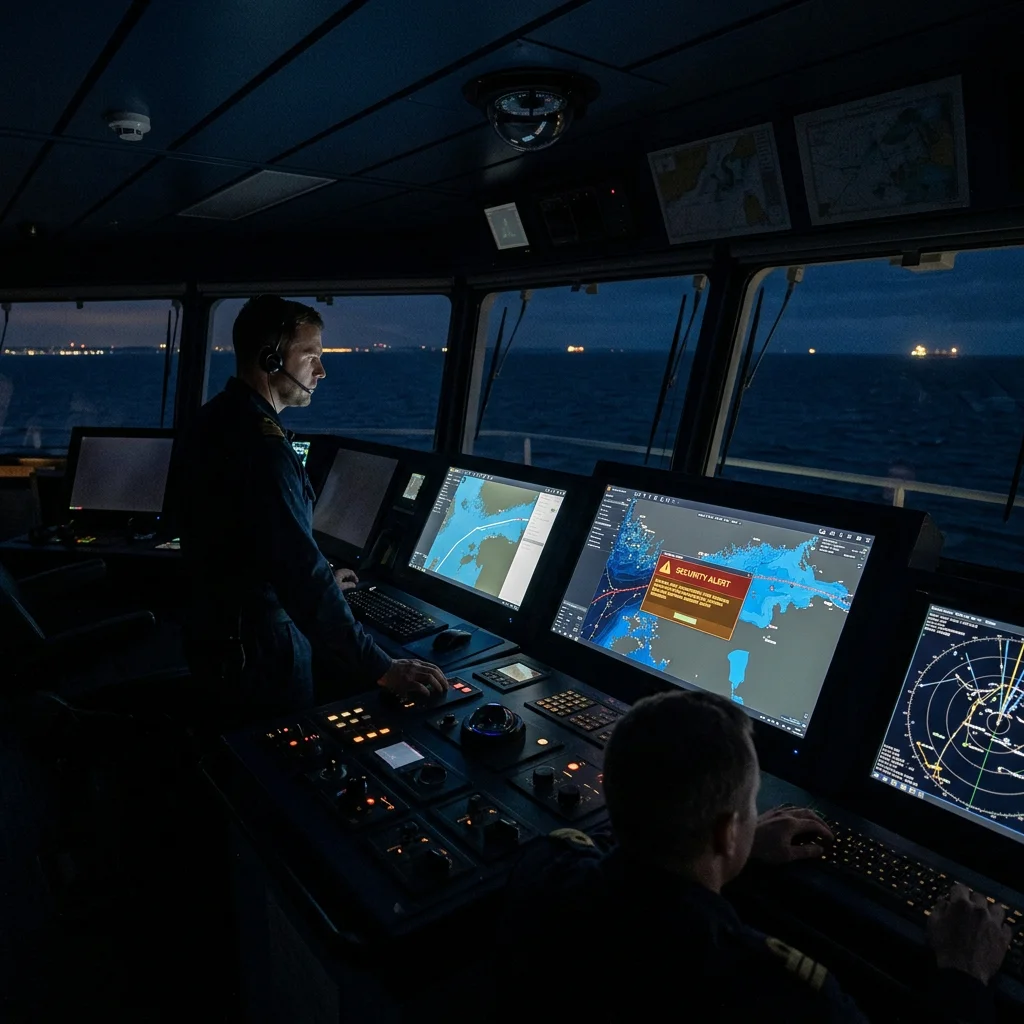
The digitization of commercial shipping has interconnected bridge navigation systems (ECDIS, GPS, AIS) with vessel engine control, ballast systems, and shore-side port IT networks. While this connectivity improves operational efficiency, it opens new attack surfaces for cyber threats targeting operational technology (OT).
Traditional classroom cybersecurity awareness is insufficient for maritime environments where a compromised sensor feed can lead to grounding or collision. Crew members need hands-on operational practice to identify anomalies in telemetry before physical safety is compromised.
Modern commercial vessels rely heavily on interconnected OT systems — Interactive cyber range scenarios allow maritime crews and port IT teams to train against real-world GPS and AIS spoofing attacks in a risk-free environment.
§ 02Simulating OT Threat Scenarios in a Managed Cyber Range
A maritime cyber range provides a high-fidelity digital twin of a vessel's navigation and industrial control networks. Instructors can inject realistic attack vectors — such as GPS position spoofing, altered AIS vessel tracks, or engine sensor manipulation — into live simulation runs.
Through realistic incident response drills, bridge officers and port cybersecurity teams learn to detect subtle sensor discrepancies, failover to manual backup instruments, and isolate infected network segments without interrupting critical shipboard operations.