The Sea-Side Half of Maritime Logistics: Routing, Fuel, Crew, and Risk
Port-side logistics gets most of the attention, but the sea-side of maritime operations — vessel routing, fuel and emissions, crew scheduling, and risk management — carries its own distinct set of optimization problems.

Most discussion of maritime logistics focuses on ports — berths, cranes, container yards. But the sea-side of the journey carries its own operational challenges: routing vessels efficiently across changeable conditions, managing fuel and emissions under tightening regulation, scheduling crews safely, and managing the open-ended risks that come with operating at sea.
Port-side logistics gets most of the attention, but the sea-side of maritime operations — vessel routing, fuel and emissions, crew scheduling, and risk management — carries its own distinct set of optimization problems.
§ 02Routing under conditions that change mid-voyage
Vessel routing has to balance fuel consumption, congested shipping lanes, and delivery schedules — and traditional routing methods struggle because conditions at sea change after a voyage has already begun. Routing approaches that incorporate real-time weather, ocean current, and port schedule data can identify disruptions as they develop and suggest route adjustments mid-voyage, with routing recommendations improving as more voyage data accumulates over time.
§ 03Fuel efficiency under emissions regulation
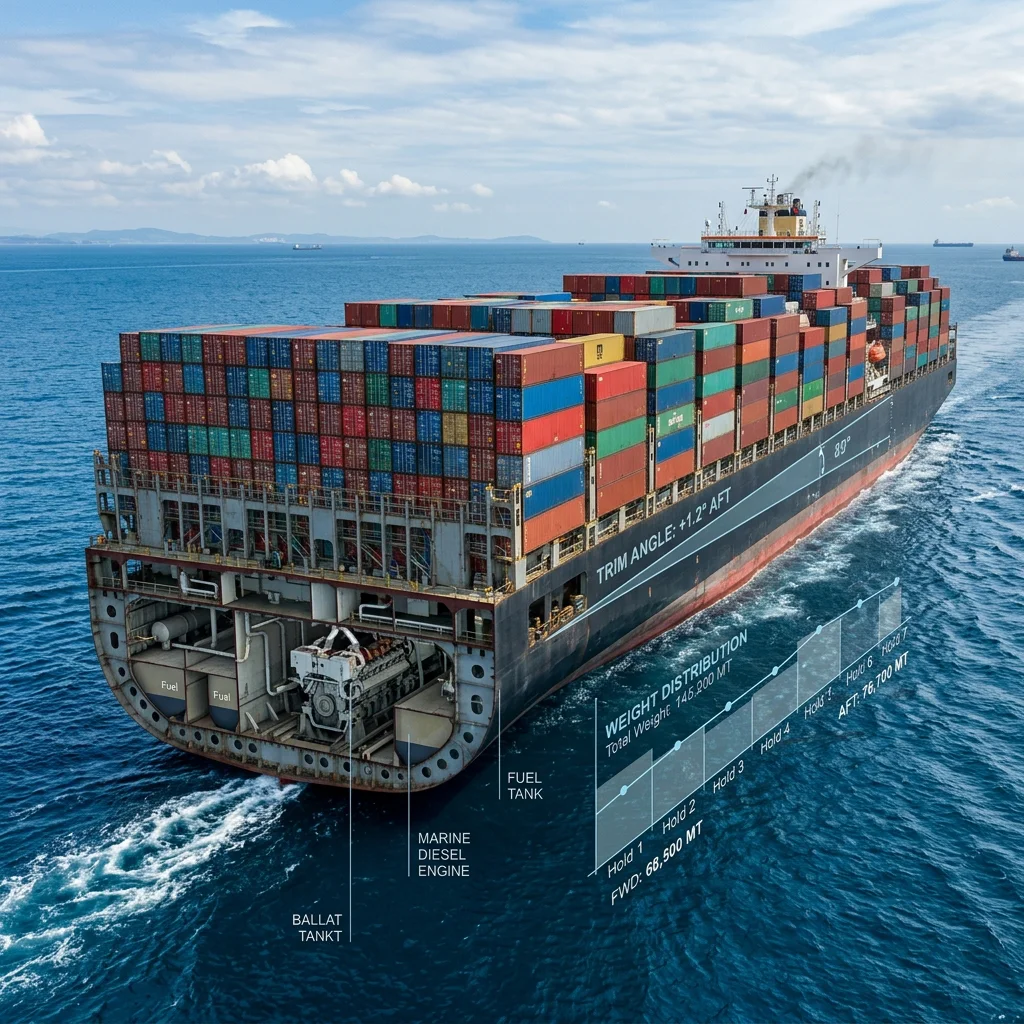
Fuel is both the largest controllable cost in maritime operations and the primary driver of emissions, and tightening international regulations mean fuel efficiency and compliance are no longer separable concerns. Optimization that considers engine performance, weather, and route efficiency together can recommend speed and engine settings that reduce consumption without compromising schedules or safety margins, while continuous emissions tracking keeps operators ahead of compliance reporting rather than reconciling it after the fact.
§ 04Crew scheduling as a safety problem
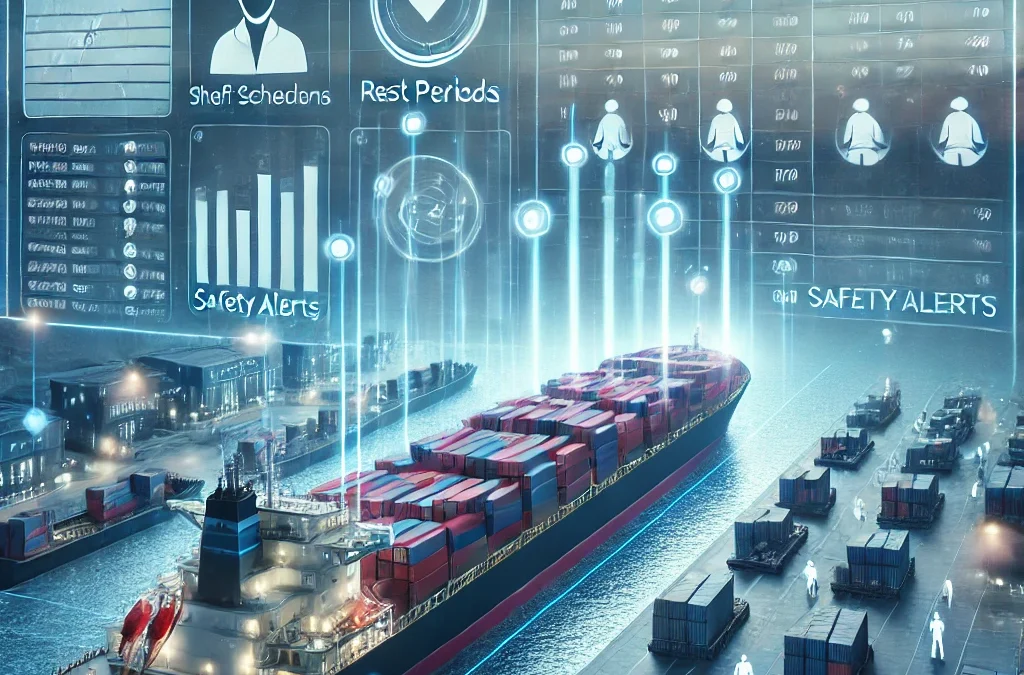
Crew scheduling at sea has to satisfy legal work-hour limits, manage fatigue, and ensure critical roles are always covered — and unlike shore-based scheduling, there's no easy way to bring in additional staff mid-voyage if a plan turns out to be wrong. Scheduling that accounts for legal constraints, individual crew capabilities, and the workload implied by the voyage plan reduces the risk of fatigue-related incidents, and pairing this with real-time monitoring of crew wellbeing surfaces problems before they become safety incidents.
§ 05Risk management and port coordination
The risks specific to maritime operations — equipment failure, collision, piracy — have traditionally been managed reactively. Predictive approaches that combine historical incident data, real-time sensor input, and external risk signals such as piracy reports can provide earlier warning and better-informed response plans when incidents do occur. A related, more routine problem is port coordination: predicting optimal arrival times and coordinating with port authorities on berth and cargo-handling availability reduces the idle time vessels spend waiting once they arrive — a cost that accumulates across a fleet far faster than it appears in any single voyage.