Mobility and Logistics: Why Two Fields Are Converging on the Same Optimization Problems
Passenger mobility platforms and freight logistics platforms were built by different teams solving different problems — until shared vehicles, shared curb space, and shared road capacity made that separation an optimization liability.

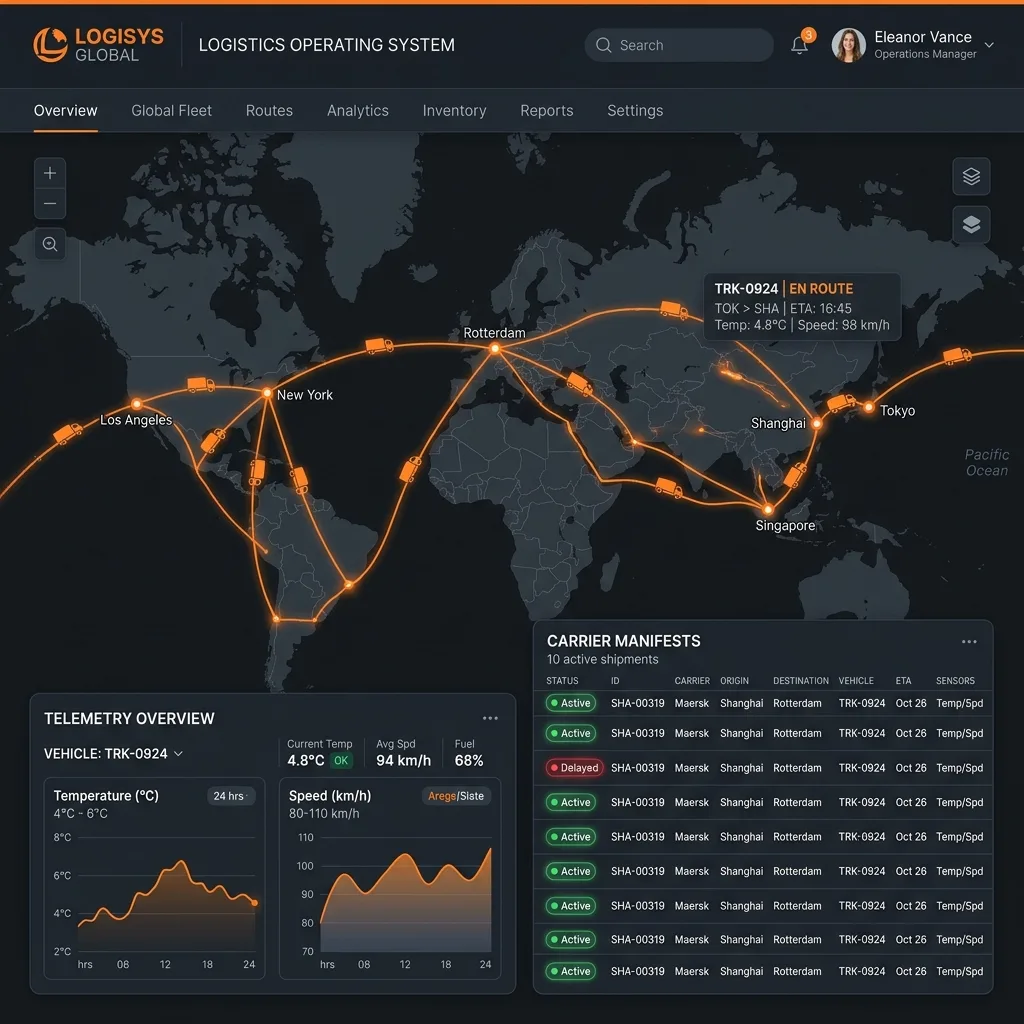
Mobility-as-a-Service platforms and transportation management systems grew up in separate software lineages. One optimizes for a person waiting at a curb; the other optimizes for a pallet waiting at a dock. For most of the last decade, that separation was harmless, because the two systems rarely competed for the same physical resource at the same moment.
That is no longer true in dense urban networks. Delivery vans, ride-hail vehicles, micromobility fleets, and transit buses now draw on the same lanes, the same curb space, and increasingly the same electric charging infrastructure. Optimizing a freight network in isolation from the mobility network sharing its streets doesn't just leave savings on the table — it can actively degrade the system a city is also trying to optimize for its residents.
Passenger mobility platforms and freight logistics platforms were built by different teams solving different problems — until shared vehicles, shared curb space, and shared road capacity made that separation an optimization liability.
§ 02The shared constraint is capacity, not category
Once vehicles compete for the same curb slot or the same signal-priority lane, the useful unit of optimization stops being 'the freight fleet' or 'the transit fleet' and becomes the shared infrastructure itself. A curb-management system that allocates loading windows without knowing a transit route also needs that curb at 5pm is solving half a problem. This is the same convergence we touched on in our earlier piece on logistics versus mobility — the fields are converging because the constraint they are both optimizing against, physical urban capacity, was never actually separable in the first place.
§ 03What a converged platform has to solve
A genuinely converged system has to solve a joint assignment problem across heterogeneous demand — people and parcels — with partially substitutable capacity: a cargo-bike lane can serve either, an idle rideshare vehicle can sometimes absorb a parcel leg, a bus lane's priority window has to be shared fairly across modes. That is a harder combinatorial problem than either field solves on its own, but it is also the only formulation that reflects what is actually happening on the street.