Operating Multimodal Logistics Hubs: Six Interlocking Optimization Problems
Road, rail, sea, and air freight converge at multimodal hubs, where cargo handling, traffic flow, storage, scheduling, energy, and security all interact. Treating any one of these in isolation tends to just shift the bottleneck elsewhere.

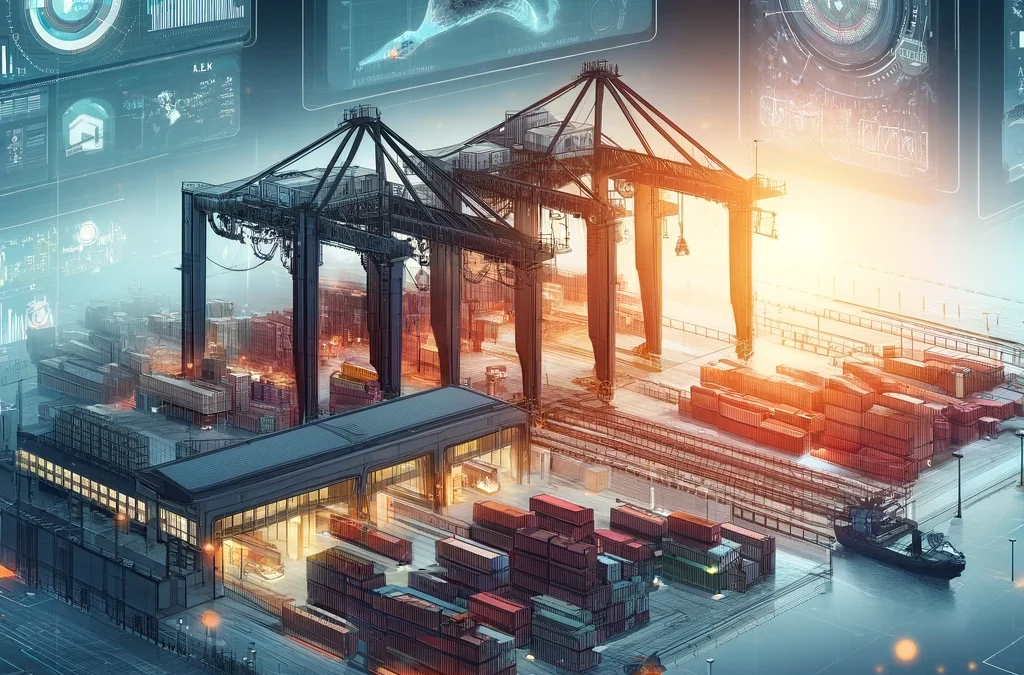
Multimodal logistics hubs — the points where road, rail, sea, and air freight converge — are among the most operationally dense nodes in global supply chains. High cargo volumes, varied vehicle types, and constant transfers between modes create a set of interacting constraints, and because the same physical space and equipment serve all of them, optimizing one in isolation tends to shift the bottleneck somewhere else rather than remove it.
Road, rail, sea, and air freight converge at multimodal hubs, where cargo handling, traffic flow, storage, scheduling, energy, and security all interact. Treating any one of these in isolation tends to just shift the bottleneck elsewhere.
§ 02Cargo handling and transfer
Moving cargo between transport modes involves coordinating loading and unloading, allocating storage space, and scheduling handling equipment — cranes, forklifts, conveyors. Inefficiency in any of these steps creates congestion that ripples through the rest of the hub. Models that combine real-time cargo volumes, equipment availability, and transport schedules can flag bottlenecks before they form and recommend equipment allocation and scheduling adjustments accordingly.
§ 03Traffic flow within a confined space
Hubs handle a continuous mix of vehicle types — heavy trucks, railcars, terminal tractors — arriving and departing within a fixed footprint. Traffic flow analysis built on GPS tracking, sensor data, and scheduling systems can identify likely congestion points ahead of time and suggest route or schedule adjustments, which matters because congestion inside a hub doesn't just slow operations — it increases fuel use and emissions for vehicles idling or rerouting within the site.
§ 04Storage allocation for transient cargo
Goods arriving from different sources are typically stored temporarily before moving to their next leg. Allocating that storage well means maximizing space utilization while keeping retrieval fast — and getting it wrong leads to wasted space, longer handling times, and inventory that's harder to track. Allocation models that factor in cargo type, volume, and expected dwell time can assign storage locations that balance these goals automatically rather than relying on static zoning.
§ 05Coordinating across modes, energy, and risk
Underlying all of the above is the scheduling problem of coordinating arrivals and departures across transport modes that operate on different speeds, capacities, and timetables — poor coordination here is what produces missed connections and delays elsewhere in the hub. Two further constraints sit alongside this: energy consumption, since hubs run large volumes of equipment and benefit from shifting operations toward off-peak energy use and optimized equipment settings; and security, where anomaly detection on access and movement patterns helps protect high-value cargo without adding manual inspection overhead.