Predictive Maintenance for Railways: Four Problems Beyond the Track Itself
Predictive maintenance for rail networks is usually framed around track condition — but rolling stock failures, network-level scheduling, sustainability, and workforce allocation are equally part of the same forecasting problem.

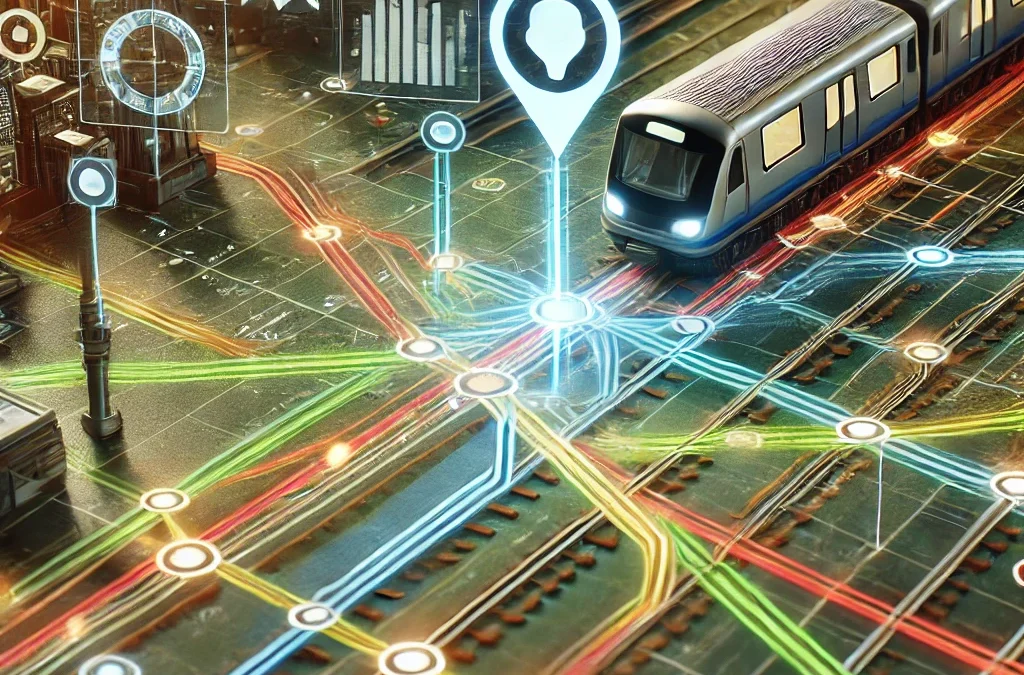
Railway maintenance has historically been reactive — issues addressed once they manifest, at the cost of downtime, safety risk, and inefficiency. Predictive maintenance shifts that timeline, but the railway context means the forecasting problem extends well beyond the rails themselves, into rolling stock, network operations, sustainability, and workforce planning, each with its own data and constraints.
Predictive maintenance for rail networks is usually framed around track condition — but rolling stock failures, network-level scheduling, sustainability, and workforce allocation are equally part of the same forecasting problem.
§ 02Predicting track degradation
Rails, sleepers, fastenings, and ballast wear at rates that depend on usage, environmental conditions, and mechanical stress — and those factors vary widely across a network, which is what makes accurate prediction difficult. Combining historical wear patterns with environmental data and real-time sensor input allows models to forecast where degradation is likely to become a problem, which in turn supports scheduling maintenance before the issue affects safety or service.
§ 03Anticipating rolling stock failures
Wheels, axles, and braking systems are typically maintained on fixed schedules, which can miss developing issues in high-stress components between checks. Continuous monitoring of vibration, fatigue indicators, and other sensor signals makes it possible to flag developing failures before they reach a scheduled inspection — and to recommend a specific intervention, such as a part replacement, calibrated to the severity of what's been detected rather than a blanket response.
§ 04Network-level effects: overcrowding and delays
In urban networks particularly, maintenance needs interact with traffic surges and infrastructure capacity limits in ways that are hard to manage independently. Combining maintenance forecasts with train scheduling, passenger flow, and capacity data allows routing and scheduling adjustments that account for both — rather than treating maintenance windows and service planning as separate problems that happen to collide.
§ 05Sustainability and workforce planning
Maintenance activities themselves carry an environmental cost — energy use, emissions, materials — and factoring that into planning means weighing maintenance options not just on cost and urgency but on their environmental footprint, including material and method choices. Alongside this sits workforce allocation: matching the right number of appropriately skilled workers to forecasted maintenance needs across a large network is itself an optimization problem, and getting it wrong leads to either wasted labour cost or unaddressed maintenance backlogs.