Time Windows: The Constraint That Quietly Breaks Last-Mile Plans
Most last-mile routes look efficient on a map. What makes them fail in practice is usually not distance but time windows — and how a single late stop pushes every later promise out of reach.

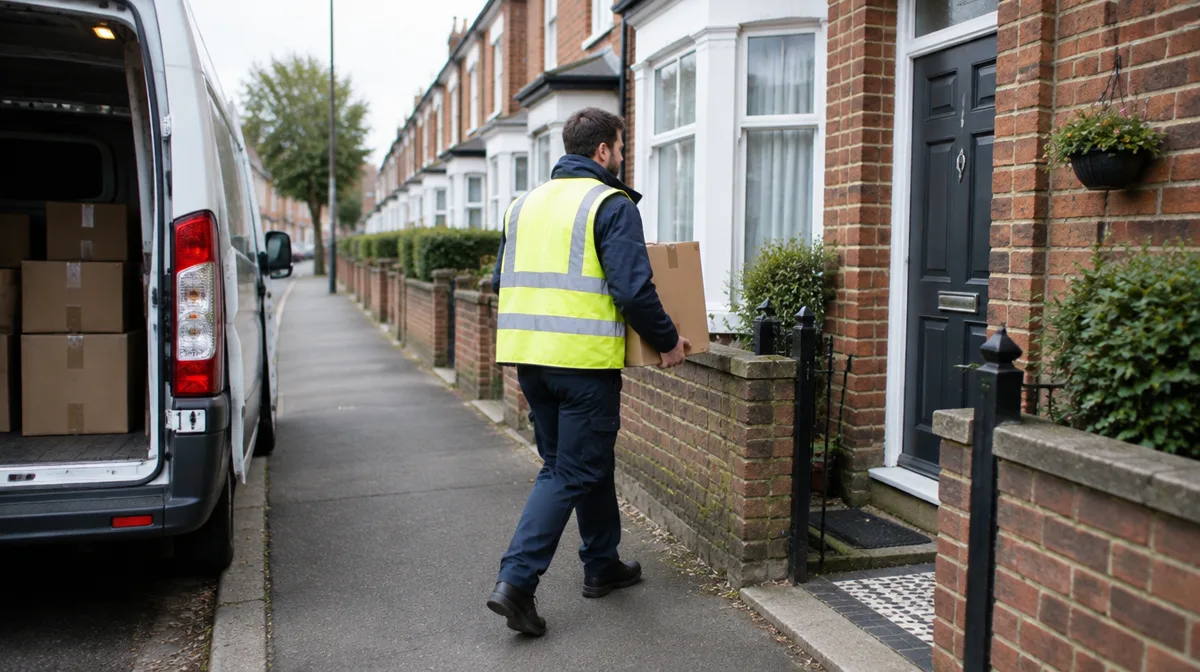
Ask a planner what makes a delivery route good and the first answer is usually distance. Shorter routes burn less fuel, need fewer vehicles and finish earlier. But in last-mile delivery, the constraint that most often decides whether a plan survives the day is not distance at all. It is the delivery time window: the promise that a parcel, a grocery order or a technician will arrive between, say, 10:00 and 12:00.
§ 01Why Time Windows Are Harder Than They Look
A time window turns an ordering problem into a timing problem. The shortest sequence of stops may arrive at one customer too early and another too late; the feasible sequence is often longer. And windows interact: once a vehicle commits to a narrow window early in the day, every later stop on that route inherits the consequences.
This is why vehicle routing with time windows is studied as its own problem class. Standard benchmark sets, such as Solomon's instances, exist precisely because tight, clustered and mixed windows behave very differently from plain distance minimization.
§ 02The Cascade Problem
Plans are usually built with an assumption about service time at each stop. Reality varies: a building with no lift, a customer who isn't home, a parking search. A ten-minute overrun at stop three is harmless if there is slack before the next window, and serious if there isn't. Late in the route, small overruns accumulate until a window is missed — often hours after the stop that actually caused it.
§ 03What Helps
Three practices make a measurable difference. First, plan with realistic service times by stop type rather than one average. Second, protect slack in front of the tightest windows instead of spreading it evenly. Third, re-sequence during the day: when a driver reports a delay, re-plan the remaining stops on that route — and, when needed, move stops to another vehicle — before a window is lost rather than after.
That last step depends on getting the disruption into the planning model quickly. Driver reports arrive as messages, not data; turning “stuck behind an accident, 30 minutes” into an updated travel time on the right road segment is exactly the translation step that Predictim Routing and GenOR-Twin are designed to handle together.