EV Freight Fleet Charging Infrastructure: Dynamic Load Management for Distribution Hubs
Transitioning heavy-duty freight fleets to electric vehicles introduces peak electricity grid charges — Co-optimizing truck dispatch schedules with battery charging curves reduces depot energy costs by up to 35%.

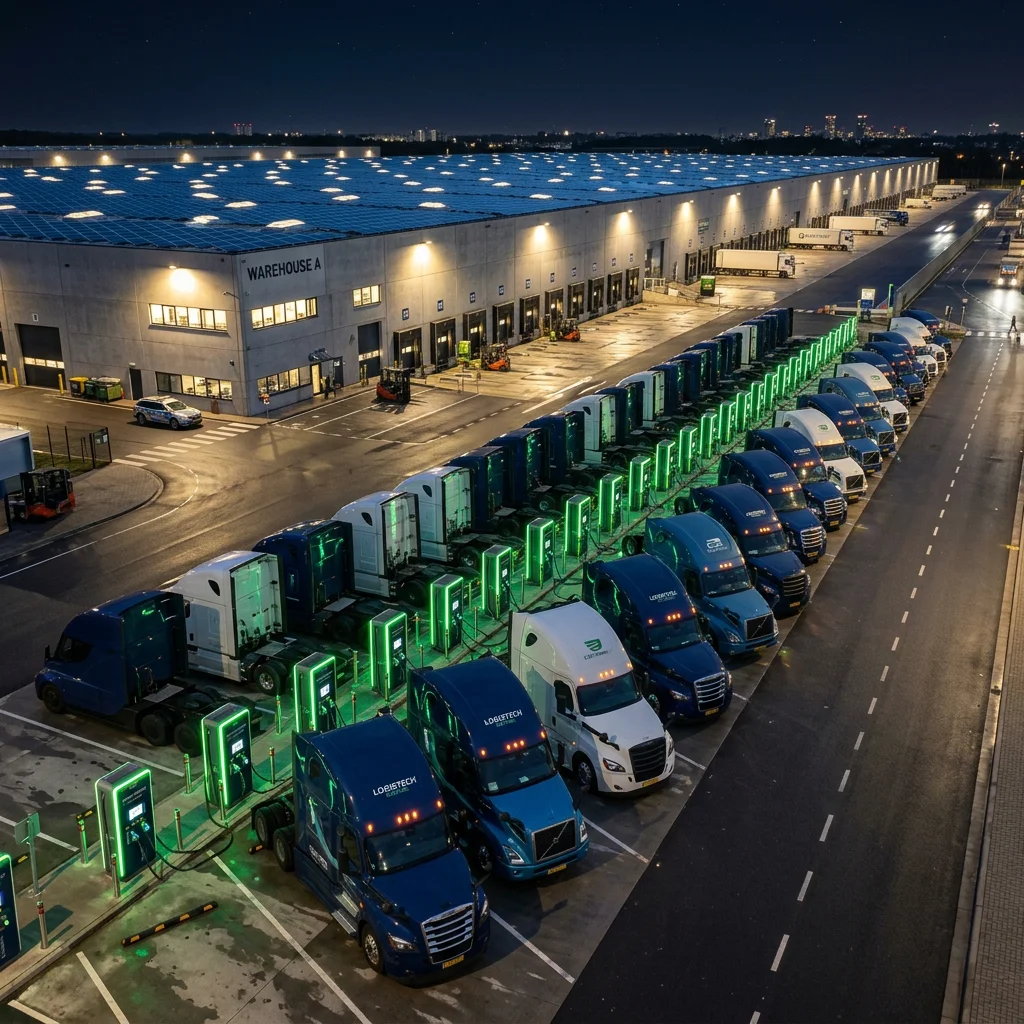
As logistics operators transition heavy-duty delivery fleets from diesel to battery electric vehicles (BEVs), depot operations encounter a new bottleneck: utility grid capacity and demand charge tariffs. Plugging dozens of Class 8 electric trucks into high-power fast chargers simultaneously can trigger massive peak demand surcharges.
Solving this operational challenge requires moving away from unconstrained 'plug and charge' strategies toward dynamic load management algorithms integrated directly with vehicle routing and dispatch schedules.
Transitioning heavy-duty freight fleets to electric vehicles introduces peak electricity grid charges — Co-optimizing truck dispatch schedules with battery charging curves reduces depot energy costs by up to 35%.