How Many Pallets? The Packing Problem in Pharmaceutical Distribution
Before an order is picked, someone has to say how many parcels, pallets and trucks it will need. Here is why that is one of the hardest problems in operations research, and why cold chains and dangerous goods make it harder for medicines.

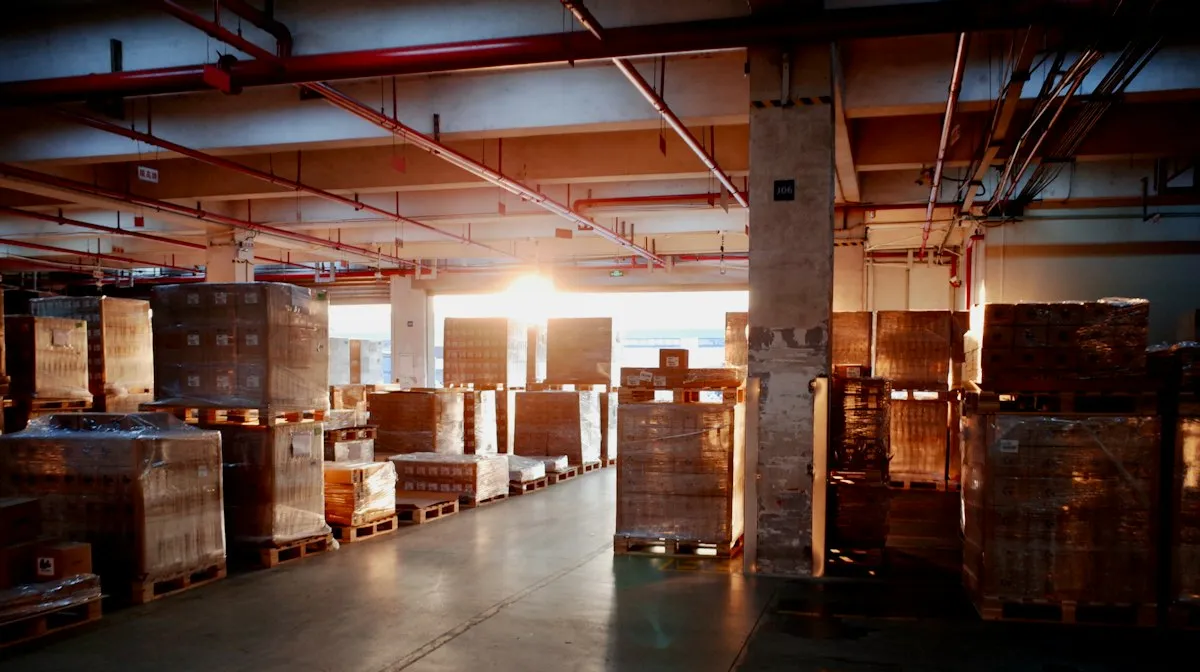
A customer order comes in. Long before anyone picks it, someone has to answer a short list of questions. How many parcels? How many pallets? What will the shipment weigh, and how much space will it take? Is it one truck, a 20-foot reefer container or three air pallets?
Freight is booked on these answers, carrier capacity is reserved on them and transport cost is quoted on them. They are needed while the order is still a list of lines on a screen, long before anyone knows how it was really packed. So the business works from an estimate, and the quality of that estimate decides how often the plan meets reality.
Errors cost money in both directions. Underestimate, and a second vehicle has to be found at short notice and premium rates, or part of the order waits for the next departure. For temperature-sensitive goods, waiting is itself a risk. Overestimate, and the business pays to ship empty space. Underneath the estimate sits one of the oldest problems in operations research: the packing problem.
§ 01A Family of Hard Problems
The packing problem asks how to place a set of items into containers so that nothing overlaps, no limit is broken and the fewest or cheapest containers are used. It comes in several forms. One-dimensional bin packing fills identical bins by weight or volume. Variable-sized bin packing chooses the cheapest mix of carton sizes from a catalogue. The pallet loading problem fits as many identical cases as possible onto one pallet layer. Three-dimensional bin packing and container loading place boxes of different sizes into cartons, pallets, trucks, containers or air freight units.
All of these problems are NP-hard. In plain terms, no known method can guarantee the best answer quickly for every instance, because the number of possible arrangements grows explosively. Ten boxes, each with six possible orientations, can be ordered and turned in more than 200 trillion ways before their positions are even considered. Packing software is therefore not a calculator. It is a search through a huge space of options, and the quality of the search decides the quality of the answer.
§ 02How the Problem Is Solved
Practical tools combine fast rules of thumb with more thorough search. The best-known rule of thumb is First Fit Decreasing: sort the items from largest to smallest and put each one into the first container where it fits. It is simple and fast, and its worst case is proven: it never uses more than about 11/9 of the optimal number of bins, plus a small constant. For three-dimensional boxes, simple heuristics build the load in layers or walls.
When a better answer is worth more computing time, optimisation methods take over. Exact methods can prove that an answer is the best possible, but only for small instances. Metaheuristics explore far more arrangements than a rule of thumb and usually find better loads within seconds, without proving that nothing better exists.
Whatever the method, it helps to know how far an answer might be from the best possible. A simple check divides the total volume by the volume of one container, or the total weight by its payload: no plan can use fewer containers than that. When a plan sits far above this floor, it is worth asking why.
§ 03Why Real Loads Are Harder Than Textbook Ones
Textbook packing is about geometry. Real packing is geometry plus a long list of physical and business rules. A widely cited review of container-loading research by Bortfeldt and Wäscher groups these rules into weight limits, weight distribution, load stability, stacking, orientation, handling priorities and the complete shipment of items that belong together.
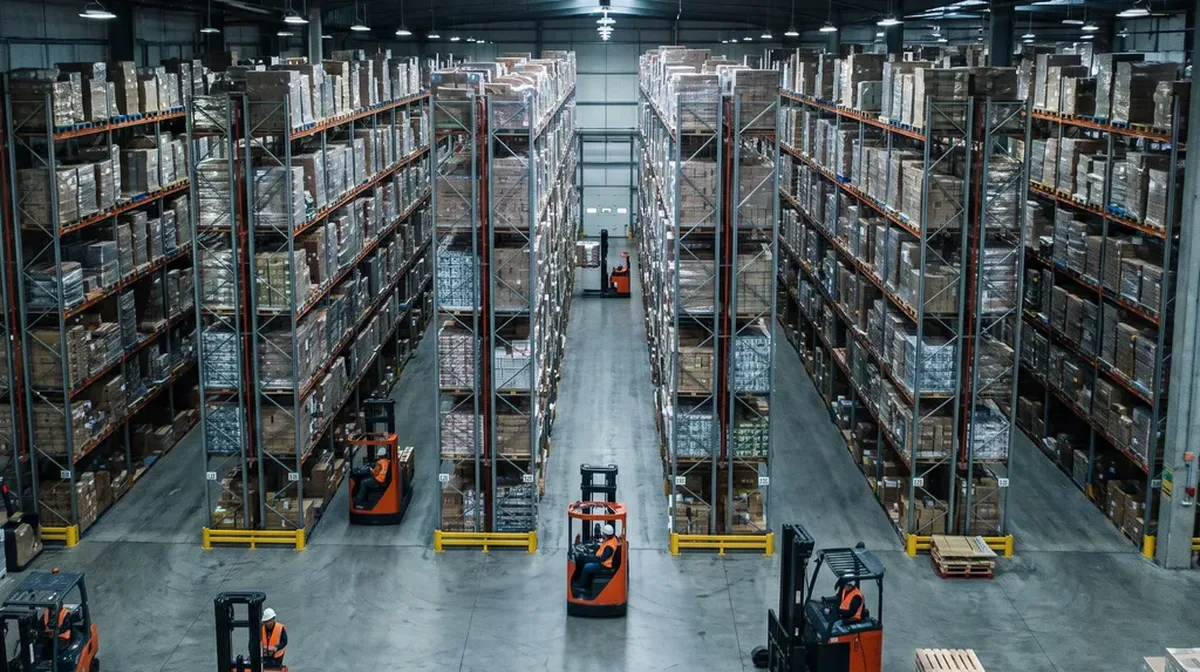
Real shipments are also packed in levels: products into cartons, cartons onto pallets, and pallets into trucks, containers or aircraft units. Each level is a packing problem of its own, and the levels depend on each other. A mixed pallet that cannot carry another pallet on top takes two floor positions instead of one, and a pallet built 5 cm too tall for an aircraft contour has to be rebuilt.
The last complication is data. A solver is only as good as the dimensions, weights and packing patterns it is given, and in practice missing or wrong product data causes more bad estimates than weak algorithms do. Clean data matters as much as a clever algorithm.
§ 04Temperature Splits the Order Before Packing Starts
A pharmaceutical shipper may send vaccines, biologics, injectables, oral liquids, tablets and antiseptics on the same order. Vaccines and many biologics travel at 2–8 °C. Most other medicines are kept at controlled room temperature, typically 15–25 °C. Some products ship frozen, and some cell and gene therapies travel deep-frozen in dry ice or liquid nitrogen. Products from different thermal classes cannot share a parcel or a pallet, and often not a vehicle, so one order becomes several independent packing problems, each with its own equipment.
Cold-chain goods add a second decision: how to keep them cold. The options are a refrigerated truck or container carrying ordinary cartons, passive insulated shippers, or active temperature-controlled containers for air freight. Passive shippers are qualified for a limited payload and duration, and their gel packs or phase-change material take up much of the space inside. The usable volume of an insulated shipper is far smaller than its outside size suggests.
§ 05Dangerous Goods Follow Different Rules by Mode
Alcohol-based antiseptics are flammable. Some disinfectants are corrosive or oxidising. Dry ice used as a coolant is itself a dangerous good (UN 1845, class 9), and temperature data loggers and active containers carry lithium batteries. Many of these items ship as limited quantities, but not all of them.
Segregation rules differ by transport mode. Road transport follows ADR, sea transport the IMDG Code and air transport the IATA Dangerous Goods Regulations, each with its own tables of which goods may travel together. A load that is legal by road may need to be split for an air shipment.
§ 06A Portfolio of Extremes, With Business Rules on Top
A single order can hold a few thousand vials that are worth a great deal and weigh very little, next to heavy cases of infusion bags or bulk liquids. Densities can differ by an order of magnitude. Bottled liquids carry “this way up” markings, glass vials limit how much weight a case can carry on top, and light, bulky insulated shippers cannot carry heavy pallets above them.
Some rules are commercial rather than physical. Products may be kept apart for reasons beyond dangerous-goods law, such as sterile products and chemical agents on the same pallet. Customers may require a specific pallet type or a maximum pallet height at their dock.
§ 07Where Volume Is Money
Pharmaceutical companies often supply many countries from a few production sites. Export orders go by air for vaccines and urgent products, by sea in reefer containers for volume, and by road across a continent. Each mode charges differently. Air freight charges the greater of the actual weight and the volumetric weight, usually 1 kg per 6,000 cm³. Road groupage often applies a density factor such as 333 kg per m³. Less-than-container-load sea freight charges per tonne or per cubic metre, whichever is greater.
Insulated shipments are light for their size, so they are usually charged on volume. Every unnecessary shipper or half-empty pallet is paid for directly, and on air freight the cost adds up quickly. Seasonal vaccination campaigns and large public tenders make it worse: volumes rise sharply for a few weeks while freight capacity tightens. Accurate estimates matter most exactly when booking mistakes are hardest to fix.
§ 08Regulation Asks for Records, Not Just Results
Good distribution practice, such as the EU GDP Guidelines (2013/C 343/01) and WHO guidance on time- and temperature-sensitive pharmaceutical products, covers temperature control during transport. When an estimate drives decisions in a regulated flow, the business must be able to show how it was produced and who approved it. Under EU GMP Annex 11 and, in the United States, 21 CFR Part 11, records and electronic signatures are part of the system rather than an afterthought.
§ 09What Good Estimates Need
Good estimates rest on a few plain foundations. Product data has to be complete and correct. The rules have to keep up with the regulations, which change often: ADR and the IMDG Code are revised every two years and the IATA regulations every year. And planners have to trust the result, so a recommendation should come with its reasons, not just its numbers.
Estimates also improve when they are compared with what actually shipped. The comparison shows where the plan and the dock disagree, and whether the plan or the data needs fixing.
§ 10Where to Start
The data usually exists already: product dimensions and weights, and a history of orders with what was actually shipped. Comparing past estimates, or today's rules of thumb, with what really left the dock shows how large the current gap is, before any process changes.
This is the kind of problem Predictim Packer is built for. It plans parcels, pallets and container loads under weight, stacking, orientation and compatibility rules, and returns each plan together with the constraints it had to respect.
Not ready for a project? Ask an engineer your question by email. No call needed.
Ask a question