Slotting Optimization: The Warehouse Problem Nobody Talks About
Slotting, deciding which product lives in which location, sets how far every picker walks. It is usually decided once and then left alone while demand moves on. Here is how to treat it as the optimization problem it is.

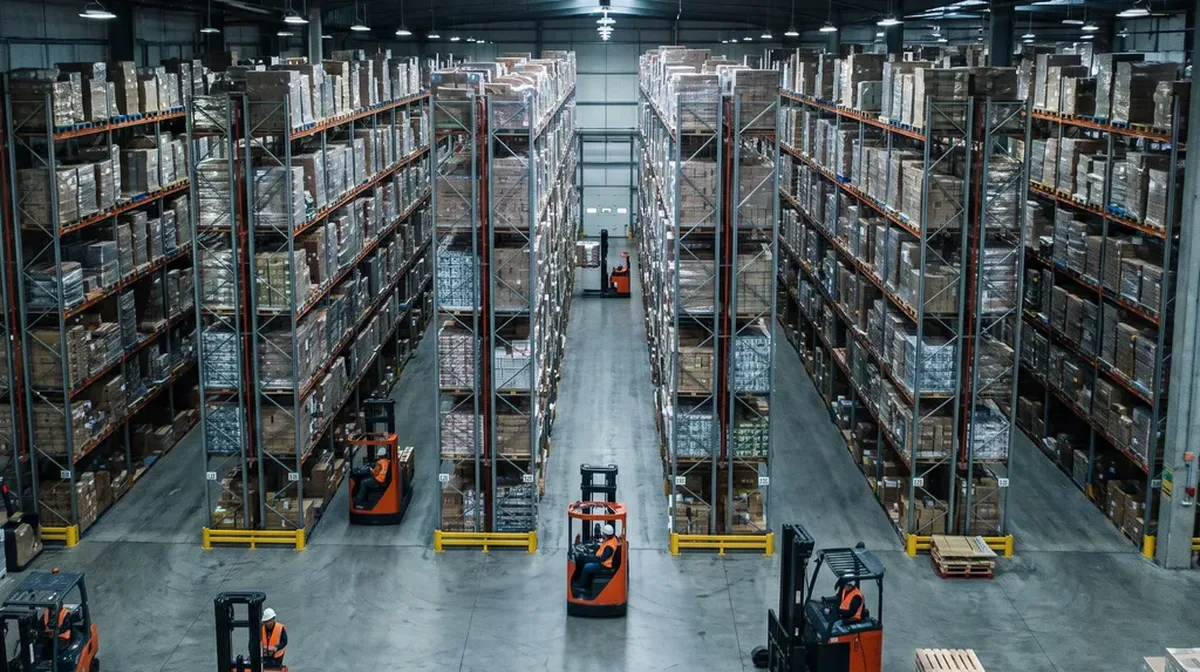
Ask a warehouse manager where productivity is lost and you will hear about labour shortages, system latency or peak-season volume. You will rarely hear about slotting: the decision of which product sits in which location. Yet slotting sets how far every picker walks, how often they bend or reach, and how often a replenishment truck blocks an aisle. It is usually decided once, at go-live or when a client is onboarded, and then left alone for years while the order mix underneath it changes.
Travel is usually the largest single part of picking time, and industry studies commonly put it at around half. Slotting is the most direct lever on travel, and because it changes where things are rather than how people work, it is often one of the cheapest to pull.
§ 01What Slotting Actually Decides
In its simplest form, slotting assigns each SKU to a storage location so that frequently picked items sit close to the dispatch area or the start of the pick path. The classical rule is the cube-per-order index: rank SKUs by the storage space they need divided by how often they are picked, and give the best locations to the lowest ratios. Small items that are picked often go nearest the front.
Real slotting goes well beyond that rule. The “golden zone” between waist and shoulder height is faster and safer to pick from than the floor or the top shelf, so heavy items and fast movers compete for the same ergonomic space. Items that are usually ordered together should sit near each other, even when one of them is a slow mover. And some placements are simply not allowed: hazardous goods must be segregated, heavy items cannot go on high shelves, and a pallet-sized product will not fit a carton-flow location.
§ 02Why It Is a Hard Optimization Problem
Taken together, slotting is an assignment problem with interacting costs. The value of putting product A in a location depends on where product B is, because the two share orders and therefore share pick paths. That makes it a quadratic assignment problem, which is NP-hard. A warehouse with tens of thousands of SKUs and locations cannot be solved to proven optimality, so practical tools combine fast heuristics with exact optimization on the parts of the layout that matter most.
The objective is contested too. The slotting that minimises travel may send most pickers into one aisle and create congestion. The one that best protects ergonomics may lengthen paths. Replenishment matters as well: a fast mover in a small location has to be refilled constantly, and the replenishment traffic can cancel out the picking gain. A useful model weighs these against each other explicitly instead of optimising travel alone.
§ 03Re-Slotting: When Moving Stock Pays
Demand keeps changing, with seasonal ranges, promotions and, in a 3PL, new clients, so the ideal slotting changes with it. Moving product is not free, though. Every relocation costs labour, takes a location out of service while it happens and risks inventory errors. Re-slotting the whole warehouse every quarter is usually as wasteful as never re-slotting at all.
The better approach treats re-slotting as a budget problem. For each candidate move, estimate the travel and replenishment saving over a planning horizon and compare it with the cost of making the move. Then carry out only the moves with the highest net benefit, within the labour available in quiet shifts. In practice, a small share of moves, typically fast movers that have drifted into poor locations, captures most of the available gain.
§ 04Where to Start
The data is usually already in the warehouse management system: order lines with timestamps, the location master with dimensions and constraints, and item dimensions and weights. A first analysis replays recent orders and compares the travel they actually needed with the travel they would have needed under an optimised layout. That gap shows whether slotting is worth working on before a single pallet is moved.
This is the kind of analysis Predictim Warehousing is built for. It computes pick paths on the warehouse's real layout graph and re-evaluates SKU placement continuously against demand, so the layout keeps up with the order mix instead of reflecting the conditions at go-live.
Not ready for a project? Ask an engineer your question by email. No call needed.
Ask a question