Low-Emission Zones: Routing Optimization Under Vehicle Access Restrictions
More and more city centres restrict which vehicles may enter and when. For a delivery fleet, that turns a routing problem into a routing and fleet-assignment problem at once. Here is how access rules are modelled and what they change in daily planning.

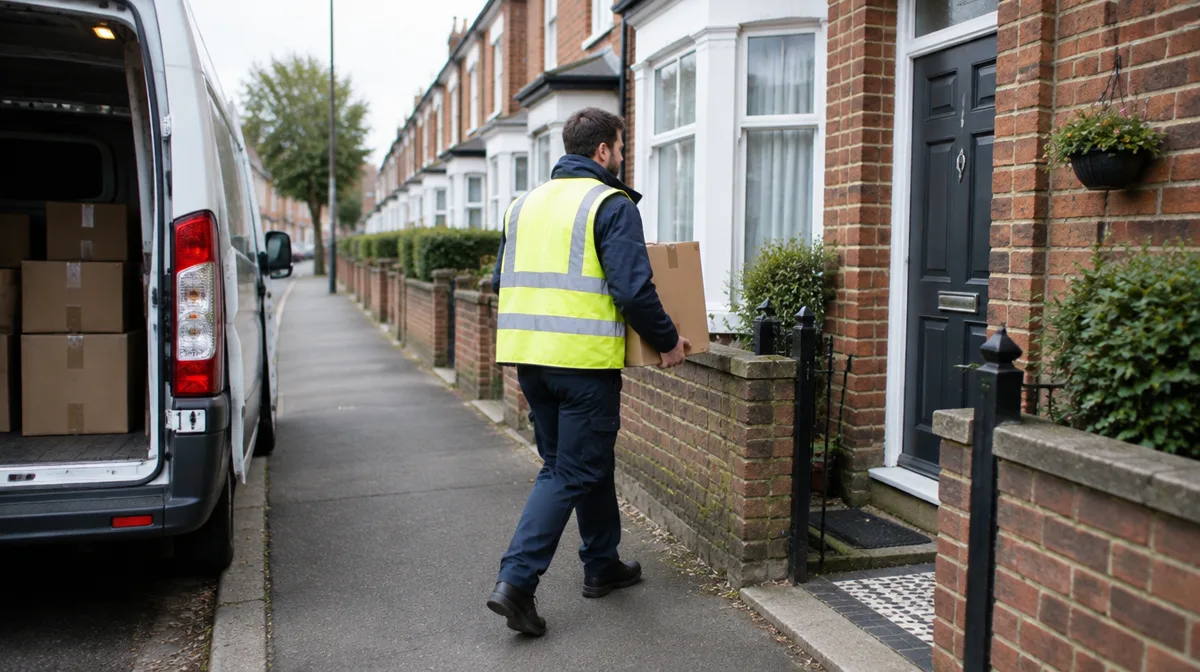
Many European cities now have low-emission zones, and the rules are getting stricter. Some ban older diesel vehicles, some charge a fee for entry, some allow only zero-emission vehicles in the core, and many add time windows when deliveries are allowed in pedestrian streets. Rules differ from one city to the next and change over time.
For a company delivering into several cities, these rules are not a side note. They decide which vehicles can serve which customers, at what cost and when. A routing plan that ignores them will either break the rules or fall apart when the driver reaches the zone boundary.
§ 01From Routing to Routing Plus Assignment
In a classic routing problem, any vehicle can visit any stop, and the question is how to group and order the stops. Access restrictions break that assumption. A stop inside a zero-emission core can only be served by an electric or other compliant vehicle. A stop in a zone with a daily fee is cheaper to serve with a compliant vehicle, or by bundling all stops in the zone into a single entry.
So the problem becomes a heterogeneous fleet routing problem with compatibility rules between vehicles and stops. The model decides at the same time which vehicle type serves each stop and in what order. In mixed fleets, this is where much of the value lies: putting the right vehicle on the right route, not just finding the shortest path.
§ 02Modelling the Rules
Access rules come in a few forms, and each maps to a modelling element. Hard bans become compatibility constraints between vehicle types and stops or road segments. Entry fees become costs that apply once per vehicle per day when the route enters the zone, which encourages grouping stops. Time-based rules become time windows on stops or on parts of the road network, for example a pedestrian street open to deliveries only early in the morning.
Road-level rules also affect travel times. A vehicle that cannot cross a zone has to go around it, so the travel time between two stops depends on the vehicle type. Routing engines need separate travel-time matrices for compliant and non-compliant vehicles to get this right.
§ 03Electric Vehicles Add Their Own Constraints
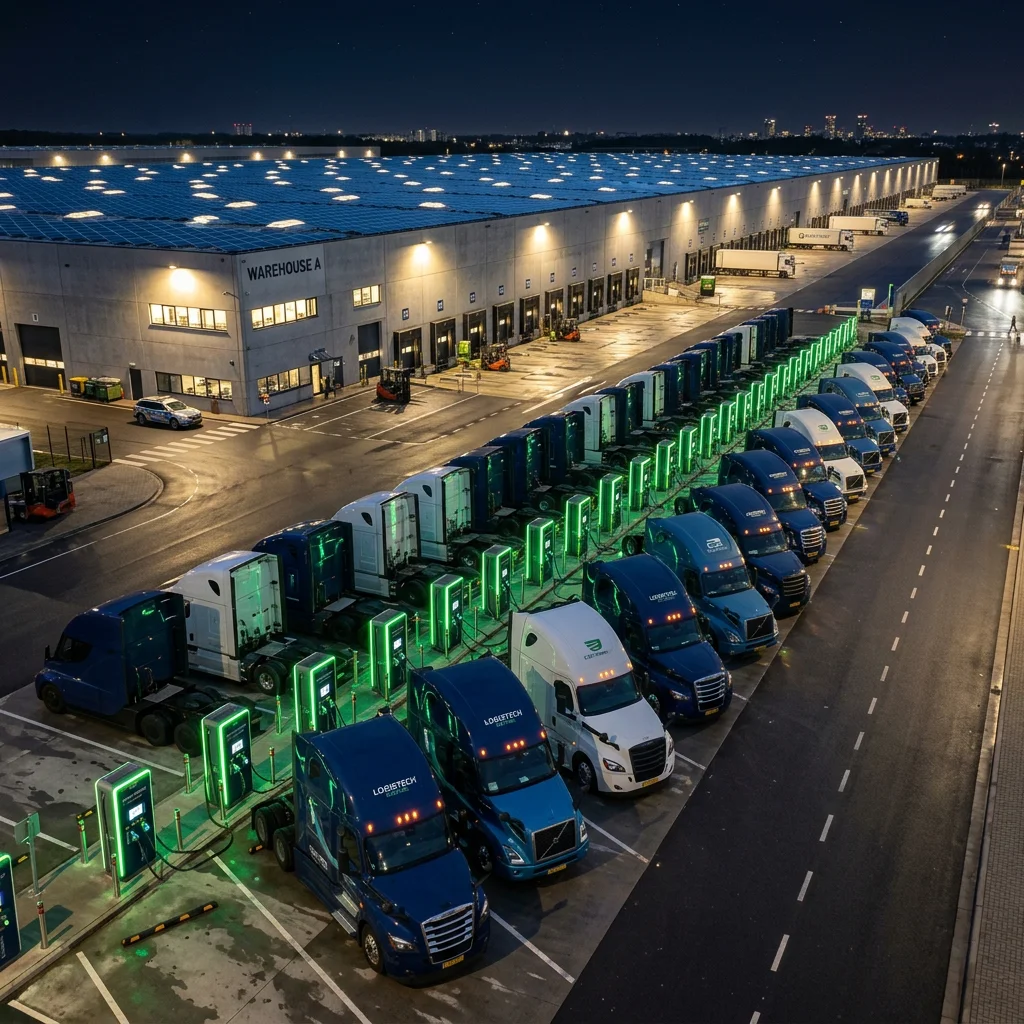
When compliance means electric vans, range and charging enter the model. A route must fit within the usable battery capacity, with a margin for cold weather and payload, or include a charging stop. Charging at the depot overnight is the simplest case; mid-day charging adds a scheduling problem of its own, because chargers are a limited shared resource.
In practice, many fleets use electric vehicles for the dense, short routes inside restricted zones and keep longer-range vehicles for peri-urban and regional routes. The optimisation can show where the line between the two should be drawn and how many compliant vehicles the operation really needs.
§ 04Consolidation and Transfer Points
Some operators go further and use a consolidation point at the edge of the zone. Larger vehicles bring goods to the edge, and small electric vehicles or cargo bikes complete the last part. This is a two-echelon routing problem: the model plans both legs and the transfer timing between them.
Whether this pays depends on density, the cost of the extra handling and the strictness of the rules. The model can compare the two-echelon set-up with direct delivery using compliant vehicles, under the same service promises.
§ 05Keeping Rules Up to Date
The rules themselves are data that change. Cities announce new phases, extend zones and adjust time windows. Keeping a maintained table of rules by city, zone and date, and feeding it into the routing engine, avoids hard-coded assumptions that quietly become wrong.
Predictim Routing supports heterogeneous fleets, dynamic window constraints and emissions targets, which are the building blocks needed to plan under access restrictions. A useful first test is to replay a few weeks of deliveries in one city with the zone rules added and see which routes and vehicles would have had to change.
Not ready for a project? Ask an engineer your question by email. No call needed.
Ask a question