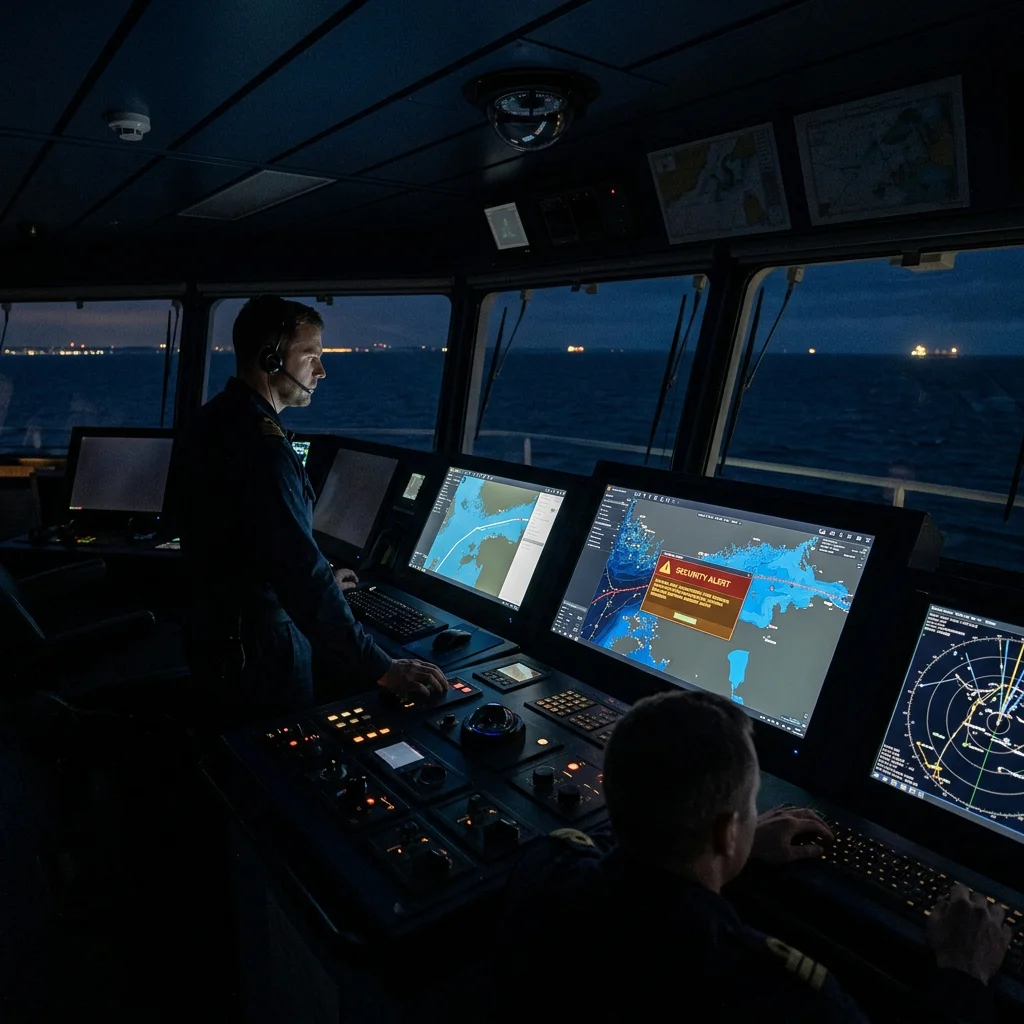
What a Maritime Cyber Drill Should Actually Test
Most maritime cyber exercises test whether people can recognize a phishing email. The incidents that matter at sea look different: a navigation display that disagrees with the window, a cargo system that stops responding mid-operation.

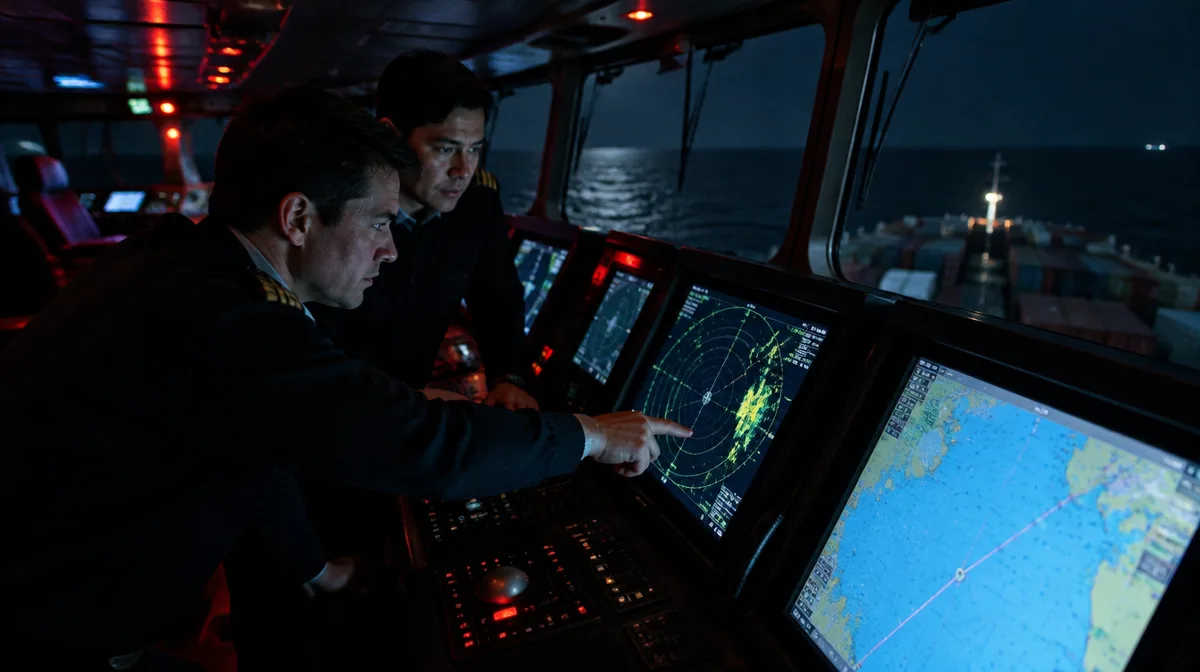
Since IMO Resolution MSC.428(98) required cyber risks to be addressed in safety management systems from 2021, most shipping companies have some form of cyber awareness training in place. Much of it is borrowed from office IT: spot the phishing email, use strong passwords, don't plug in unknown USB sticks. All of that is worth knowing. Very little of it resembles what a cyber incident on a working vessel actually looks like.
§ 01Test Recognition Under Operational Conditions
On a bridge, the first sign of a cyber problem is rarely an alert that says “cyber”. It is a position that doesn't match the radar picture, an ECDIS that freezes, an alarm that won't clear. A useful drill puts officers in that situation and measures whether they recognize it as a possible cyber event at all — and how long that takes — while they are still navigating.
§ 02Test the Fall-Back, Not Just the Report
Reporting an incident matters, but at sea the immediate question is safety: can the crew revert to manual or independent means, and do they know which systems they can still trust? A drill should require the crew to actually make that switch and keep the ship safe, not just tick a box saying they would.
§ 03Test the Ship–Shore Handoff
Many incidents cross the boundary between vessel and shore: a compromised update from the office, a port system that pushes bad data, a remote-access session that shouldn't be open. Exercises that involve only the ship, or only the office, miss the handoff where responsibility is most often unclear. The most informative drills run both sides at once.
§ 04Score More Than Pass or Fail
A single pass mark hides the useful information. Detection time, response time, whether safety was maintained, whether procedures were followed, and how well the team communicated are different skills, and crews are rarely strong or weak on all of them at once. Scoring each separately shows a training manager exactly where to focus the next session.
That is the approach behind the Predictim Maritime Cyber Range: realistic, role-specific scenarios across vessel, port, shore, supply chain and offshore operations, scored against a competency framework mapped to MSC.428(98), so that training produces evidence of readiness rather than a certificate of attendance.
Not ready for a project? Ask an engineer your question by email. No call needed.
Ask a question