Railway Signalling Systems and Predictive Maintenance: What the Data Actually Tells You
Signalling failures cause disproportionate delay relative to how often they happen, and they degrade differently than track or rolling stock — which means the sensors and the model both have to be chosen system by system.

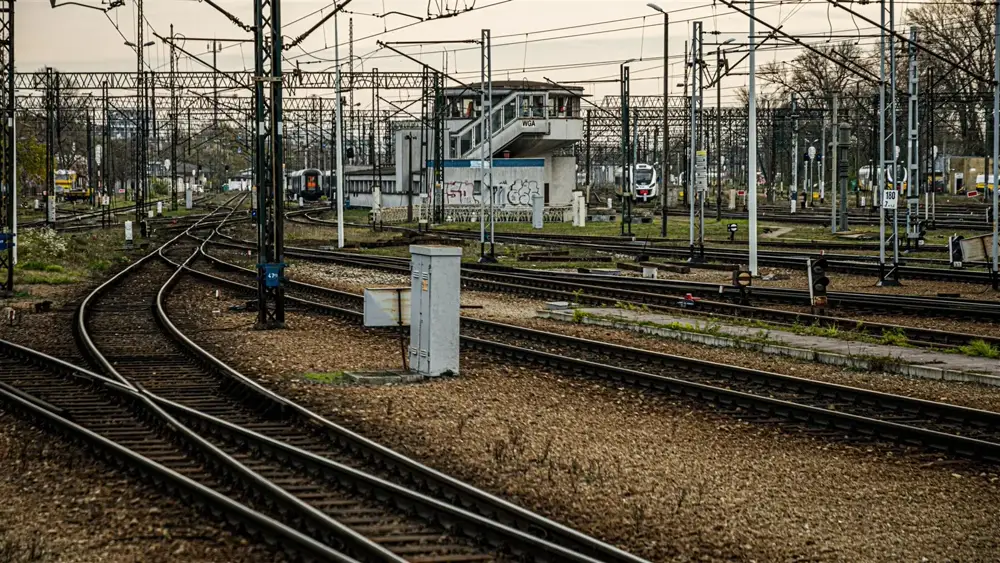
A single signalling fault can hold an entire section of a network at a standstill in a way a single wheel-bearing fault rarely does — trains behind the failure have nowhere to go, and recovery time compounds across the schedule long after the fault itself is fixed. That asymmetry between failure frequency and failure impact is why signalling is usually the first place operators want predictive maintenance to reach, and also why it behaves the least like the track and rolling-stock models it gets compared to.
Signalling failures cause disproportionate delay relative to how often they happen, and they degrade differently than track or rolling stock — which means the sensors and the model both have to be chosen system by system.
§ 02Why signalling degrades differently than track or rolling stock
Track and bearing wear are continuous processes — a crack grows, a bearing's vibration signature drifts, and a sensor reading crosses a threshold before real failure. Signalling logic itself is discrete: an interlocking either sets a route safely or it doesn't. What degrades continuously, and what a predictive model can actually forecast, sits one layer beneath that logic — in the electromechanical relays, power supplies, and communication links the logic depends on. Legacy relay-based interlockings fail through contact erosion and current-cycling wear that shows up as slowly rising contact resistance long before a relay misoperates. Modern ETCS and CBTC installations fail through a different mechanism entirely — trackside balise read errors, radio block centre message timeouts, and cable insulation degradation on the communication links the logic depends on, none of which resembles mechanical wear.
§ 03What's instrumentable, system by system
That difference in failure mechanism determines what's worth sensing. For relay-based interlockings, coil current draw and contact resistance are the leading indicators, and the sensing is often a retrofit — install monitoring on legacy hardware never designed to report its own condition. For ETCS and CBTC systems, the useful signal is often already being generated: balise telegram error rates, RBC handover latency, and radio link quality are logged by the system's own diagnostics, just not routed anywhere a forecasting model can use them. The practical starting point differs by system age far more than by operator size.
§ 04From event logs to failure forecasting
The most common mistake is assuming a signalling predictive maintenance programme starts with new sensors. Most signalling systems, legacy and modern alike, already generate large volumes of fault and diagnostic logs that go largely unmined — reviewed only after an incident, not continuously screened for the slow drift that precedes one. The first phase of a workable programme is almost always extracting and structuring that existing log data, since it is frequently sufficient to build an early warning model before any new instrumentation is installed at all. New sensors earn their cost only after that existing signal has been exhausted.