Predictive Maintenance for Rolling Stock: From Wheel-Bearing Sensors to Fleet-Wide Failure Forecasting
Rolling stock predictive maintenance is not one model but a portfolio of them — wheelsets, bogies, and braking each fail differently, and the fleet-wide payoff only appears once isolated anomaly flags become calibrated remaining-useful-life estimates.

"Rolling stock predictive maintenance" reads like a single system, but a train is several independently-failing subsystems sharing a chassis — wheelsets and bearings, bogie suspension, braking, traction motors, HVAC — each with its own sensor set, failure signature, and time-to-failure profile. Treating it as one model is the most common reason these programmes underperform their pilot results once rolled out fleet-wide: the pilot vehicle's dominant failure mode was never representative of the whole fleet's.
Rolling stock predictive maintenance is not one model but a portfolio of them — wheelsets, bogies, and braking each fail differently, and the fleet-wide payoff only appears once isolated anomaly flags become calibrated remaining-useful-life estimates.
§ 02Axle-box and bearing condition monitoring
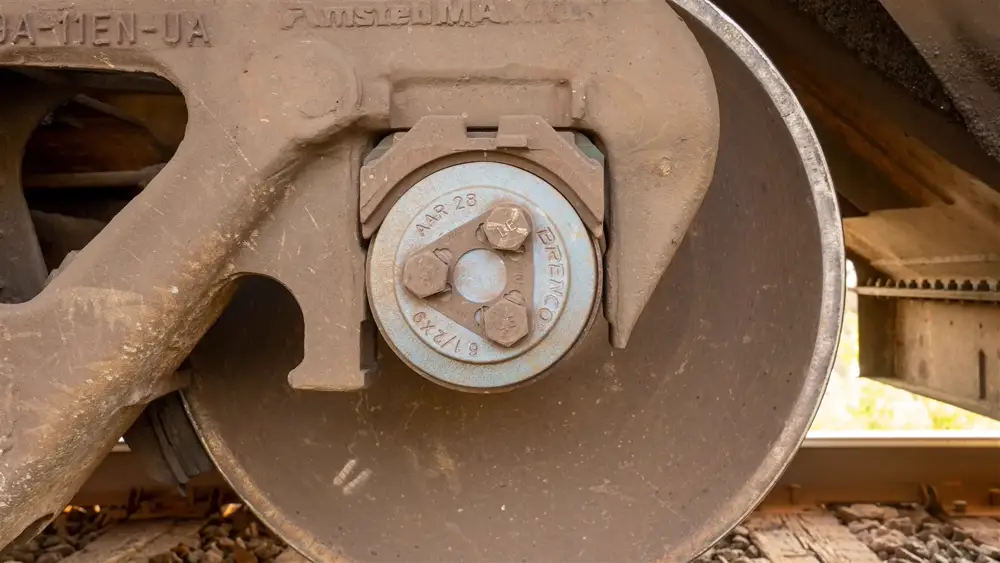
Wheel-bearing failure is the subsystem with the longest instrumented track record — trackside hot-box detectors have flagged overheating bearings for decades, just too late in the failure progression to prevent a service disruption, only to prevent a derailment. The shift underway is from that trackside, drive-by snapshot to continuous onboard monitoring: axle-box temperature and vibration sensors that track a bearing's condition across its entire service life rather than at scattered detector locations along the route. The failure signature is well understood — a well-characterised progression from elevated vibration at specific frequency bands to measurable temperature rise — which makes bearings one of the more tractable rolling-stock components to forecast accurately, once continuous data replaces the drive-by snapshot.
§ 03Bogie dynamics and ride-quality drift
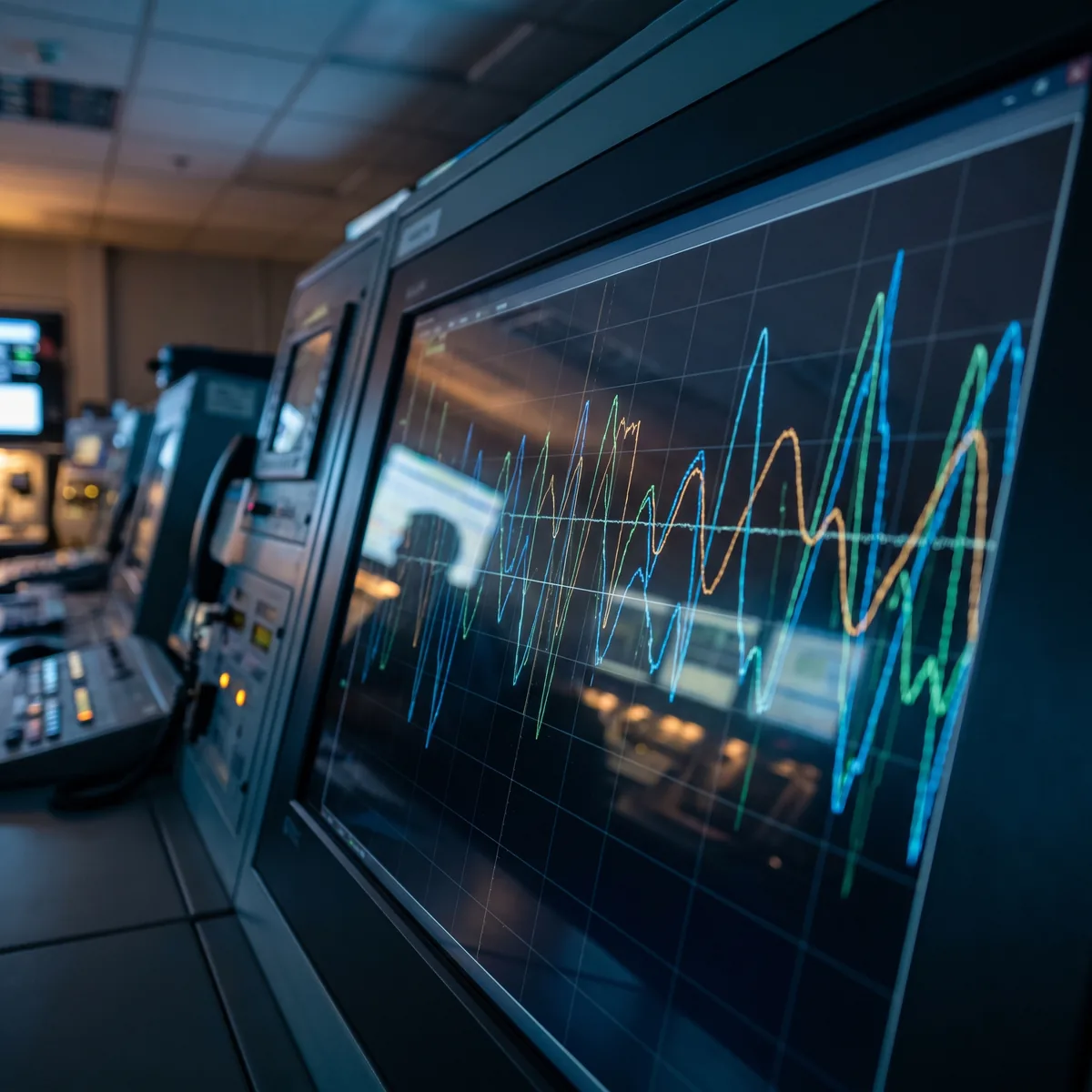
Bogie-mounted accelerometers, originally installed for ride-comfort monitoring, turn out to carry a second signal: wheel flats, suspension component wear, and worn dampers all show up first as a gradual shift in the vehicle's baseline ride-quality signature, well before they cross a threshold that would trigger a fault code. The modelling challenge here is different from bearings — the signal is noisier and more route-dependent, since track quality itself affects the same accelerometer readings a failing suspension would, so a usable model has to separate route-caused vibration from vehicle-caused vibration before it can flag anything reliably.
§ 04From component alerts to fleet-wide remaining-useful-life
A threshold alarm on a single vehicle is not the same thing as a fleet-wide predictive maintenance programme, and the gap between them is where most of the real value sits. A fixed vibration or temperature threshold, tuned on one vehicle, generates false alarms on an older vehicle with naturally higher baseline wear and misses early degradation on a newer one running a harsher duty cycle. Closing that gap means pooling sensor history across the whole fleet with per-vehicle covariates — mileage, route profile, prior maintenance history — as inputs, which is where sequence models like LSTMs earn their added complexity over a simple threshold: they learn what a *specific* vehicle's normal looks like against the backdrop of what the fleet's normal looks like, and forecast a remaining-useful-life window rather than a binary alarm. That distinction is what turns a component-level anomaly detector into a fleet-wide maintenance-scheduling input — one that tells a planner which bogie needs attention in the next six weeks, not just which one crossed a fixed line today.