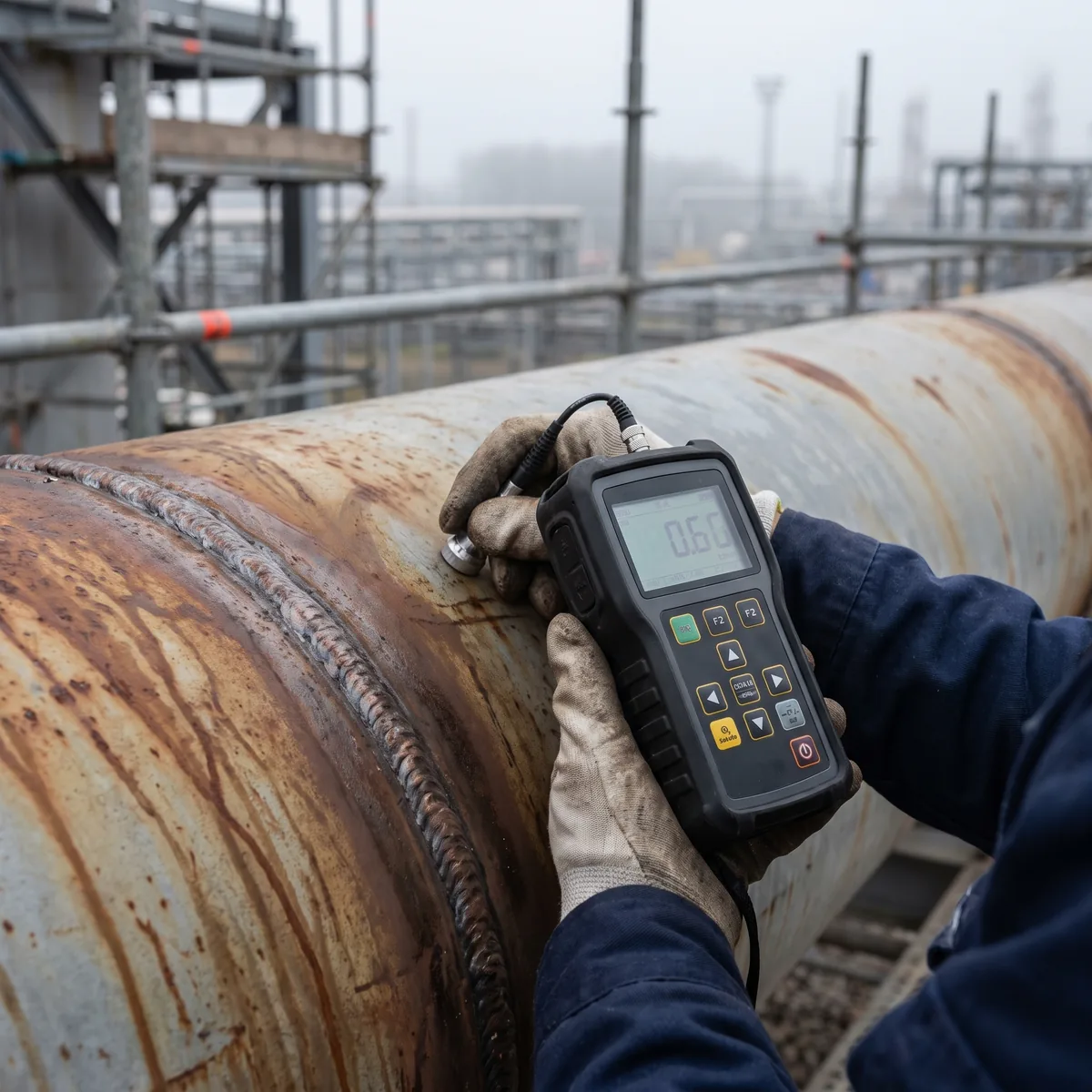
Which Platforms Help Extend Asset Life Through Corrosion Forecasting? An Evaluation Guide
Corrosion forecasting platforms range from generic anomaly detectors to physics-informed remaining-life models — the difference determines whether a flagged pipe segment gets an inspection crew or gets ignored.

Buyers evaluating corrosion-monitoring software increasingly ask a narrower question than they used to. It used to be 'should we invest in condition monitoring at all' — now, with in-situ sensors and SCADA integration widely available, the question is 'which platform', and the answers on offer range wildly in what they actually deliver.
That range matters more than most procurement checklists capture. A platform that flags anomalies against a fixed threshold and a platform that forecasts remaining wall thickness eighteen months out both call themselves 'predictive corrosion monitoring' — but only one of them gives a maintenance planner a number they can schedule against.
Corrosion forecasting platforms range from generic anomaly detectors to physics-informed remaining-life models — the difference determines whether a flagged pipe segment gets an inspection crew or gets ignored.
§ 02Anomaly detection is not remaining-life forecasting
The cheapest tier of corrosion software does one thing well: it tells you when a sensor reading crosses a threshold set at commissioning. That is useful for catching sudden events — a coating failure, a sudden pH shift — but it says nothing about the rate of ongoing metal loss, which is the number that actually determines when a segment needs intervention. Forecasting platforms instead fit a corrosion-rate model — informed by material grade, environmental exposure, and historical inspection data — and project it forward, producing a remaining-useful-life estimate with a confidence interval rather than a binary alarm.
§ 03Three questions that actually filter the field
In practice, three questions separate the platforms worth a pilot from the ones that will get shelved after a year. First: does the model fuse in-situ telemetry with a physics-based corrosion-rate model, or does it just interpolate between periodic manual inspection readings? Second: does the remaining-useful-life number come with a confidence interval an asset integrity engineer would be willing to sign off on, or is it a black-box score with no audit trail? Third: does the platform expose that forecast through an API that plugs into the existing maintenance-planning workflow, or does it live in a closed dashboard nobody outside the monitoring team ever opens? A platform that answers all three well is doing meaningfully different work than one that answers none of them — even when the marketing copy reads the same.