Digital Twins vs. Simulation: What's Actually Different
Digital twin has become a label for almost any model with a 3D view. A simulation model and a digital twin share a lot, but they answer different questions and need different data. Knowing the difference helps decide which one a project actually needs.


Few terms in industrial technology are used as loosely as digital twin. It can mean a 3D visualisation of a plant, a simulation model of a warehouse, a dashboard of live sensor data, or a full model kept in sync with a physical system in real time. When a project starts with the goal of building a digital twin, the first useful step is often to agree on what that means.
Simulation and digital twins are related. Both represent a real system in software so that its behaviour can be studied. The differences lie in how they are connected to reality, how long they live and what decisions they support.
§ 01What a Simulation Model Is
A simulation model represents how a system works: arrivals, processes, queues, resources, failures, rules. It is used to answer what-if questions. What happens to throughput if we add a second packing line? How many berths do we need if traffic grows? What if a supplier's lead time doubles?
A simulation model is typically built for a study, fed with historical data and assumptions, and run many times under different scenarios. It does not need to know what the real system is doing right now. Its value lies in exploring options before committing to them, often for design and investment decisions.
§ 02What Makes Something a Digital Twin
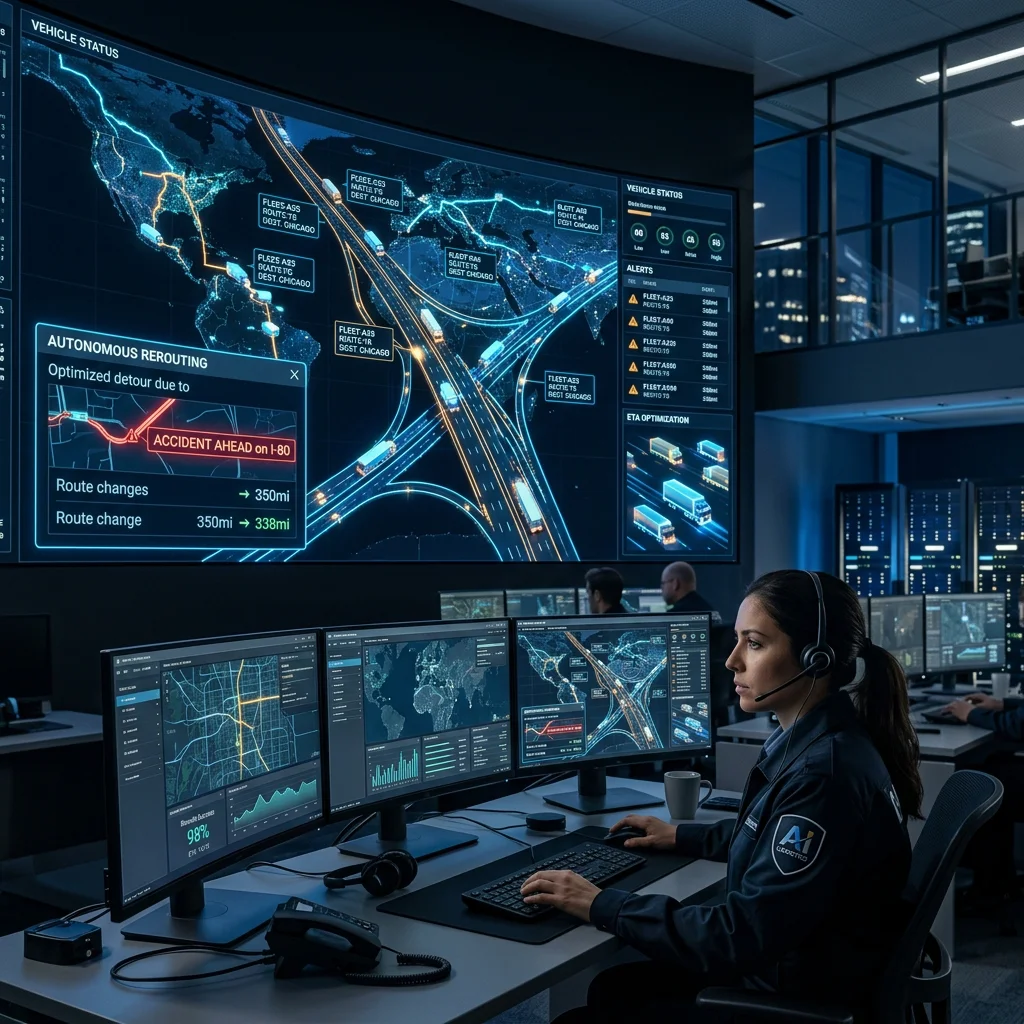
A digital twin adds a live link. It is continuously updated with data from the real system, positions, states, sensor readings, orders, so that its state mirrors the current state of the physical system. That link is what makes it a twin rather than a model.
With that link, the twin can answer questions about now and the near future: given where everything is at this moment, what will happen in the next hours? Where will the bottleneck appear this afternoon? If this machine stops, which orders will be late? It supports operational decisions, made frequently, rather than one-off design decisions.
§ 03Different Demands on Data and Upkeep
A simulation study can live with data cleaned once for the purpose. A twin needs reliable data feeds, mapping between system identifiers and model objects, and handling of missing or late data. When the physical system changes, a new machine, a changed layout, a new rule, the twin must be updated, or it slowly diverges and loses trust.
This makes twins more expensive to run than simulation models. The investment is justified when the decisions they support are frequent and valuable enough. For a one-time layout decision, a simulation study is usually the better tool.
§ 04Where Optimisation Fits
Neither simulation nor a twin decides anything by itself. They evaluate. To recommend what to do, they are paired with optimisation: the twin provides the current state and predicts consequences, and an optimisation model searches for the best plan given that state. Simulation then checks how robust the recommended plan is under uncertainty.
Many systems described as digital twins are really this combination: a live state, a prediction layer, an optimiser and a user interface. Naming each part separately helps clarify what is being built and what each part needs.
§ 05Choosing What You Need
A few questions usually settle the choice. Is the decision made once or repeatedly? Does it depend on the current state of the system or on long-term averages? Is reliable live data available, and who will maintain the links when the system changes? If the answers are once, averages and limited data, start with simulation. If they are daily, current state and solid data feeds, a twin may be worth it.
Starting small is often wise. A simulation model built for a design study can later become the core of a twin, once the data links exist and the operational need is clear.
Not ready for a project? Ask an engineer your question by email. No call needed.
Ask a question