Empty Container Repositioning: The Industry's Oldest Unsolved Optimization Problem
Trade is not balanced, so containers pile up where goods arrive and run short where goods leave. Moving empty boxes back costs money and earns nothing. Here is why repositioning is so hard to optimise and which levers actually reduce it.

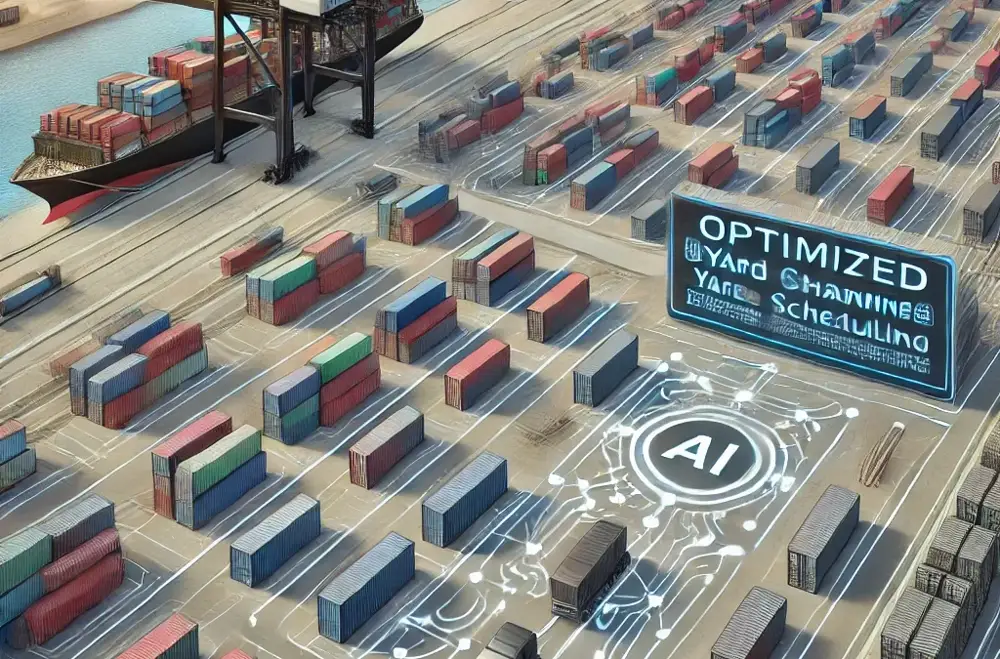
A container is only useful where there is cargo to put in it. Because trade between regions is rarely balanced, full containers flow in larger numbers in one direction than the other. Boxes accumulate in import-heavy regions and run short in export-heavy ones. To keep exporters supplied, carriers and leasing companies move empty containers back, by sea, rail, barge and truck.
These moves cost money for handling, transport and storage, and they earn no freight revenue. They also take vessel space and terminal capacity that could serve paying cargo. Empty repositioning has been studied for decades, yet it remains a large and stubborn cost, because the problem combines network scale, uncertainty and many decision makers.
§ 01The Shape of the Problem
At its core, repositioning is a network flow problem over time. Each depot or port has a supply of empty containers and a demand for them, by container type and by day. Links between locations have costs, transit times and capacities. The goal is to decide how many empties to move along each link and when, so that future demand is met at the lowest total cost of moves, storage and shortages.
Container types add a layer. A shortage of 40-foot high cubes is not solved by a surplus of 20-foot boxes, and reefers need different handling. So the model is really a set of linked flow problems that share transport capacity.
§ 02Why Uncertainty Dominates
The flows have to be planned before demand is known. An empty container loaded on a vessel today will arrive in weeks, while export bookings in the destination region are only partly known that far ahead. Return times of import containers are uncertain too, because they depend on how long importers keep the box before returning it.
A plan based on average forecasts tends to move too few empties to volatile locations and too many to stable ones. Better models plan for a range of scenarios, keep safety stocks of empties at key depots, and update decisions as bookings arrive. In practice, repositioning is reviewed frequently and adjusted in small steps rather than fixed once.
§ 03Levers Beyond Moving Boxes
Optimising the moves helps, but several of the largest gains come from reducing the need to move at all. Street turns, where an import container is reused directly for a nearby export without returning to the depot, avoid two empty truck trips. They need a matching system and agreement on who bears the inspection and liability risk.
Pricing and incentives matter too. Lower freight rates on the backhaul direction can attract cargo to fill boxes that would otherwise travel empty. Free time and detention charges influence how quickly importers return containers. Sharing pools of containers between carriers or with leasing companies can balance supply across a wider network, although commercial agreements are required.
§ 04Inland Matters as Much as Sea
Much of the cost of an empty move happens on land: truck trips between importers, depots, terminals and exporters, often over long distances. Choosing inland depot locations, rail and barge links, and where empties are returned can reduce these costs considerably. Inland and sea repositioning are best planned together, because a cheap sea move can be wasted by an expensive inland leg.
Data on where containers are, and in what condition, is a precondition. Many carriers now track their equipment with IoT devices, which makes it easier to see imbalances early and to find candidates for street turns.
§ 05Where to Start
A practical first analysis maps the flows of full and empty containers in one region over the last year, by type and by location. It quickly shows where the imbalance is structural, where empties travel long inland distances, and how often import and export containers of the same type were in the same area at the same time but did not meet.
From there, a rolling optimisation model can recommend weekly repositioning decisions under demand scenarios, and a matching tool can propose street turns. Neither will remove the imbalance in trade, but together they reduce the share of the network's effort spent moving air.
Not ready for a project? Ask an engineer your question by email. No call needed.
Ask a question