Arbitrating a dry-season shortage across municipal, agricultural, and industrial demand
Decision support for allocating scarce basin water across competing sectors during drought conditions
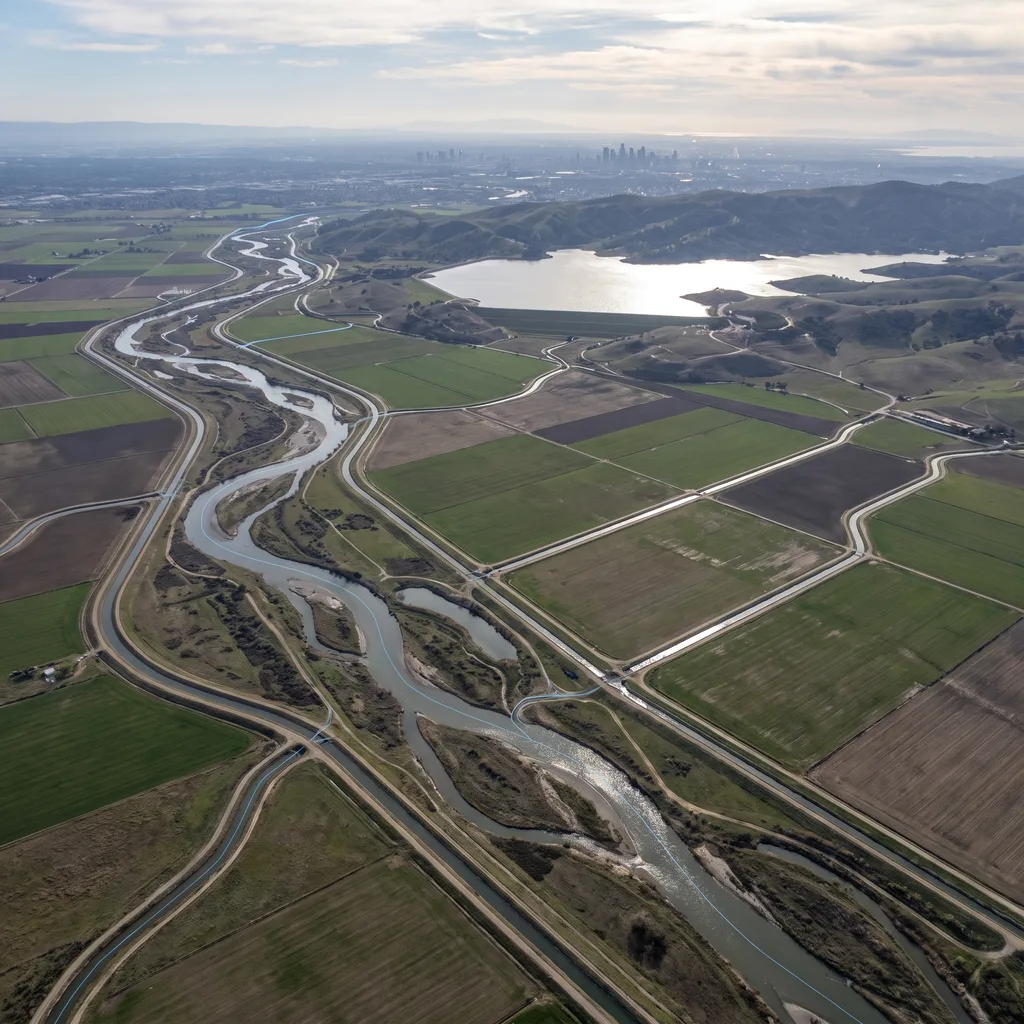
These figures match the published metrics on the Predictim WIOP product page — this walkthrough is a composite scenario, not a specific engagement.
Decision support for allocating scarce basin water across competing sectors during drought conditions
Segment: River-basin water allocation
Basin managers typically track reservoir levels, off-take points, and seasonal demand in spreadsheets built for a normal year, not a shortage. When a dry season cuts expected inflow, there's no systematic way to weigh ecological flow minimums against competing municipal, agricultural, and industrial demand, or to see the consequence of a reservoir release decision before making it. Allocation calls end up made reactively, sector by sector, rather than as one balanced plan.
How the deployment was structured
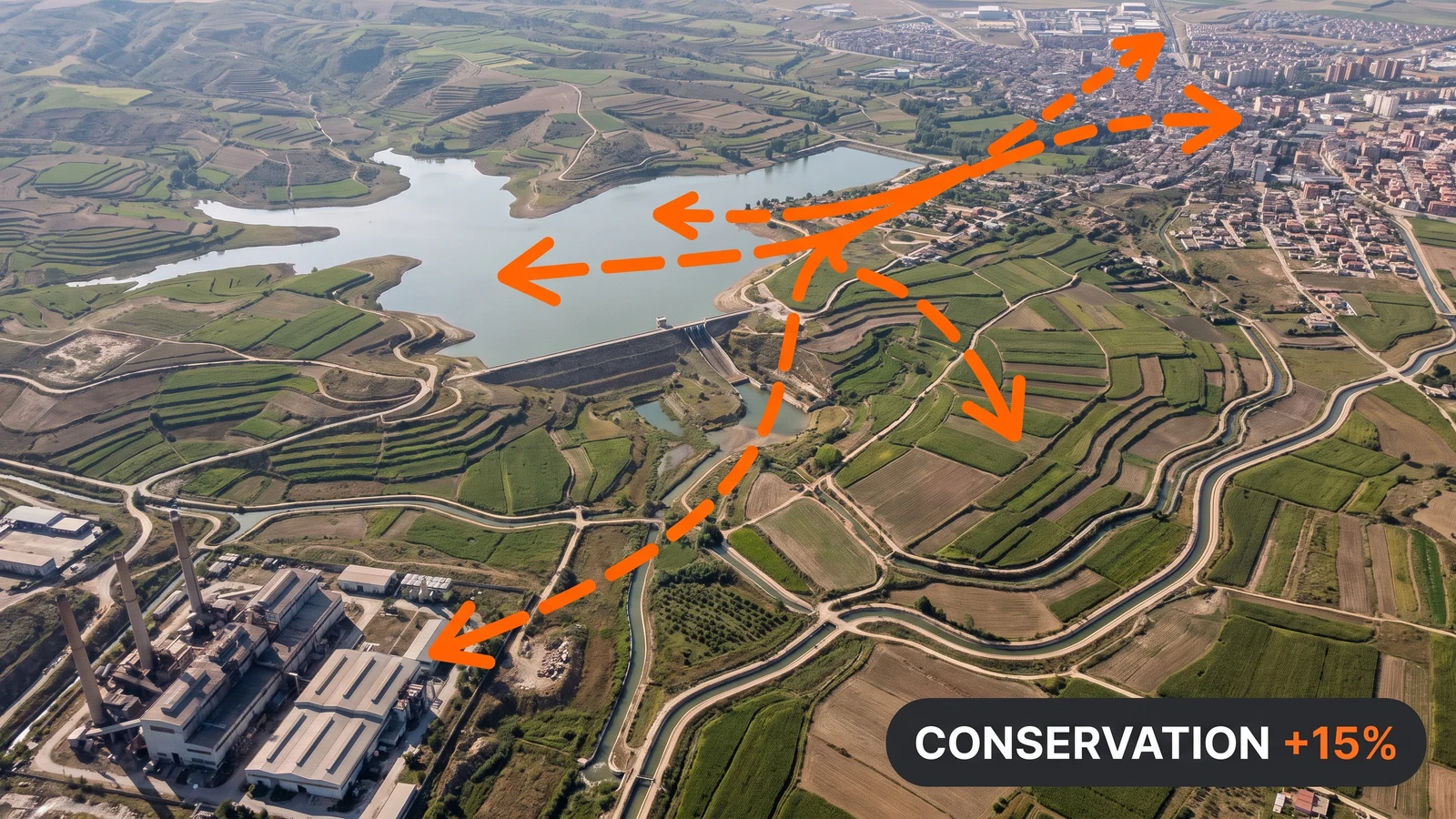
One map of the basin
Predictim WIOP puts river basins, aquifers, reservoirs, and every sector off-take point on a single interactive map, replacing scattered spreadsheets with one live picture of availability.
Demand forecast ahead of the decision
A 48-hour demand forecast across irrigation, industrial, and urban consumption — adjusted for weather — gives managers lead time instead of reacting to yesterday's numbers.
Shortage arbitrage, not fixed schedules
Under scarcity, allocation plans are computed to balance ecological flow minimums against social and economic priority, rather than falling back on a normal-year schedule that no longer fits.
Reservoir and pump orchestration
Release and pump schedules are coordinated to protect safety-stock volumes while minimising electricity cost under dynamic tariffs.
The value shows up specifically when the normal-year schedule stops working: instead of adjudicating each sector's request in isolation, a basin authority can see the full-basin trade-off and commit to one allocation plan with a forecast horizon ahead of it.
Other use cases
All use cases
Turning “off sick tonight” into an updated nurse roster
View
Re-planning routes from what drivers actually report
View
A cost contingency you can defend when the risk assessments disagree
ViewReady to optimize your operations?
Talk to our research team about your operational challenge. Receive a tailored technical proposal within 72 hours.