Generating a validated pipe route from a written spec, not a blank CAD file
Agentic CAD generation for industrial tube and pipe routing, with every AI-proposed constraint passing deterministic engineering checks before it reaches the model

These figures match the published metrics on the Predictim NeuroPipe product page — this walkthrough is a composite scenario, not a specific engagement.
Agentic CAD generation for industrial tube and pipe routing, with every AI-proposed constraint passing deterministic engineering checks before it reaches the model
Segment: Constrained-geometry CAD generation
Constrained-geometry design problems like industrial tube and pipe routing start from natural-language requirements, existing CAD assemblies, and 2D drawings that an engineer has to manually translate into a parametric model. Using a large language model to speed that up sounds appealing until it proposes a constraint or a placement with no engineering check behind it — geometry an LLM invents directly is exactly what a validation-conscious engineering team can't sign off on.
How the deployment was structured
Constraints extracted, not invented
A semantic layer reads free-text requirements, CAD metadata, and 2D drawings to propose candidate constraints, each with a confidence score and a link back to its source.
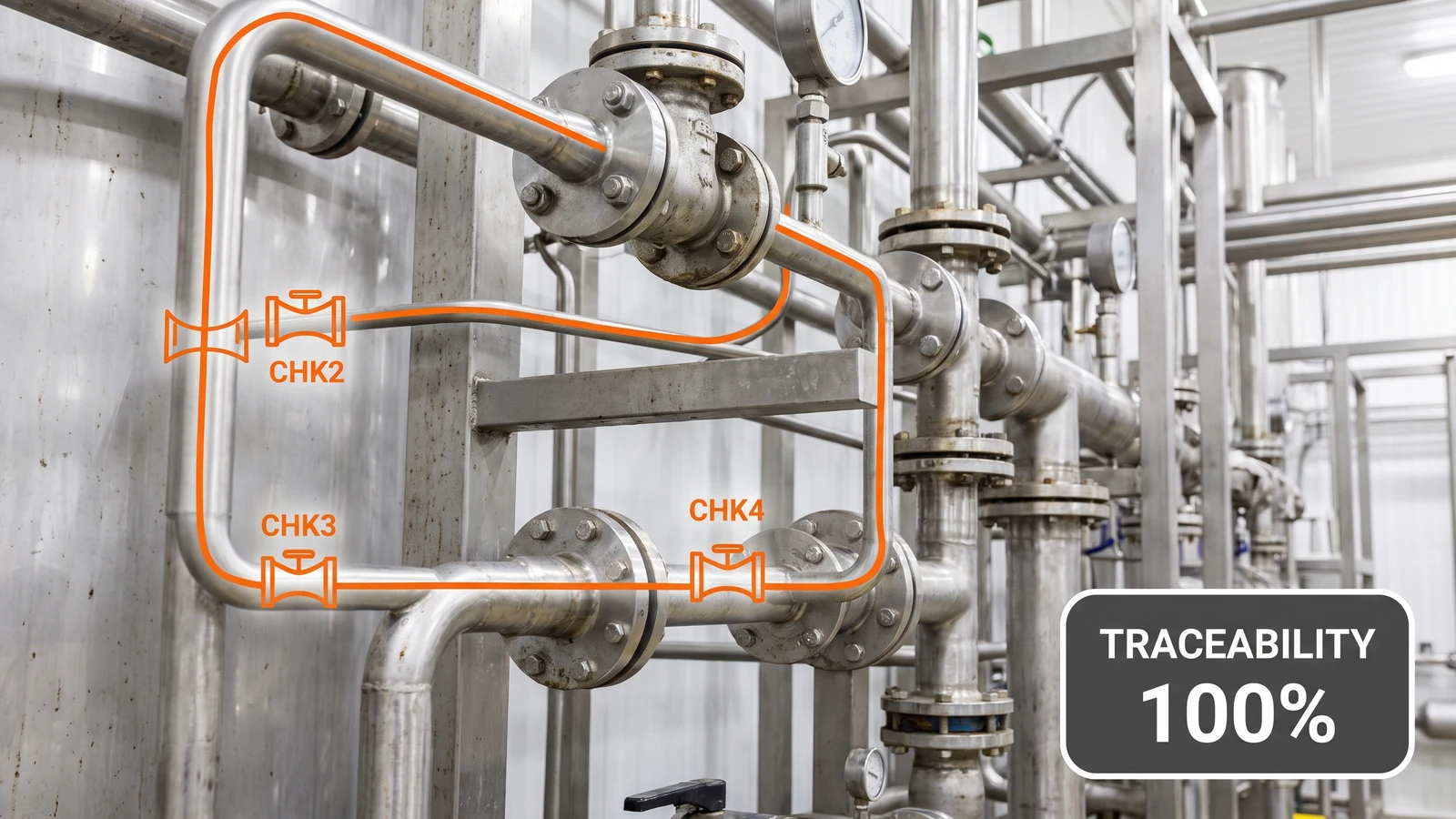
Four deterministic gates before anything counts
Every candidate constraint passes geometric and engineering checks before it can influence generation; anything uncertain routes to human review instead of being silently accepted.
A parametric component, not a static export
Validated constraints parametrize an editable 3D component through a deterministic CAD engine, so engineers keep working in their existing tooling instead of starting over from a mesh.
Placement solved, not guessed
Combinatorial solvers propose routing and placement that satisfies every validated constraint while minimising footprint — the same optimisation lineage as Predictim's routing and stowage products.
Routing every AI-proposed constraint through four deterministic gates — instead of trusting the model's geometry directly — is what makes an LLM-assisted CAD workflow something an engineering team can actually sign off on.
Other use cases
All use cases
Turning “off sick tonight” into an updated nurse roster
View
Re-planning routes from what drivers actually report
View
A cost contingency you can defend when the risk assessments disagree
ViewReady to optimize your operations?
Talk to our research team about your operational challenge. Receive a tailored technical proposal within 72 hours.