Clearing a customs document set without re-keying it into three systems
Agentic automation for port and customs document processing across manifests, clearances, and compliance filings
These figures match the published metrics on the AI Agents & Intelligent Automation product page — this walkthrough is a composite scenario, not a specific engagement.
Agentic automation for port and customs document processing across manifests, clearances, and compliance filings
Segment: Port and customs document processing
Port and customs documentation for a single vessel call typically has to move across several systems that don't talk to each other — a manifest gets checked against a booking, a customs declaration gets filed separately, and a compliance record gets assembled by hand afterward. Each handoff is a re-keying opportunity for errors, and when a document doesn't match across systems, finding out why usually means someone tracing it back manually.
How the deployment was structured
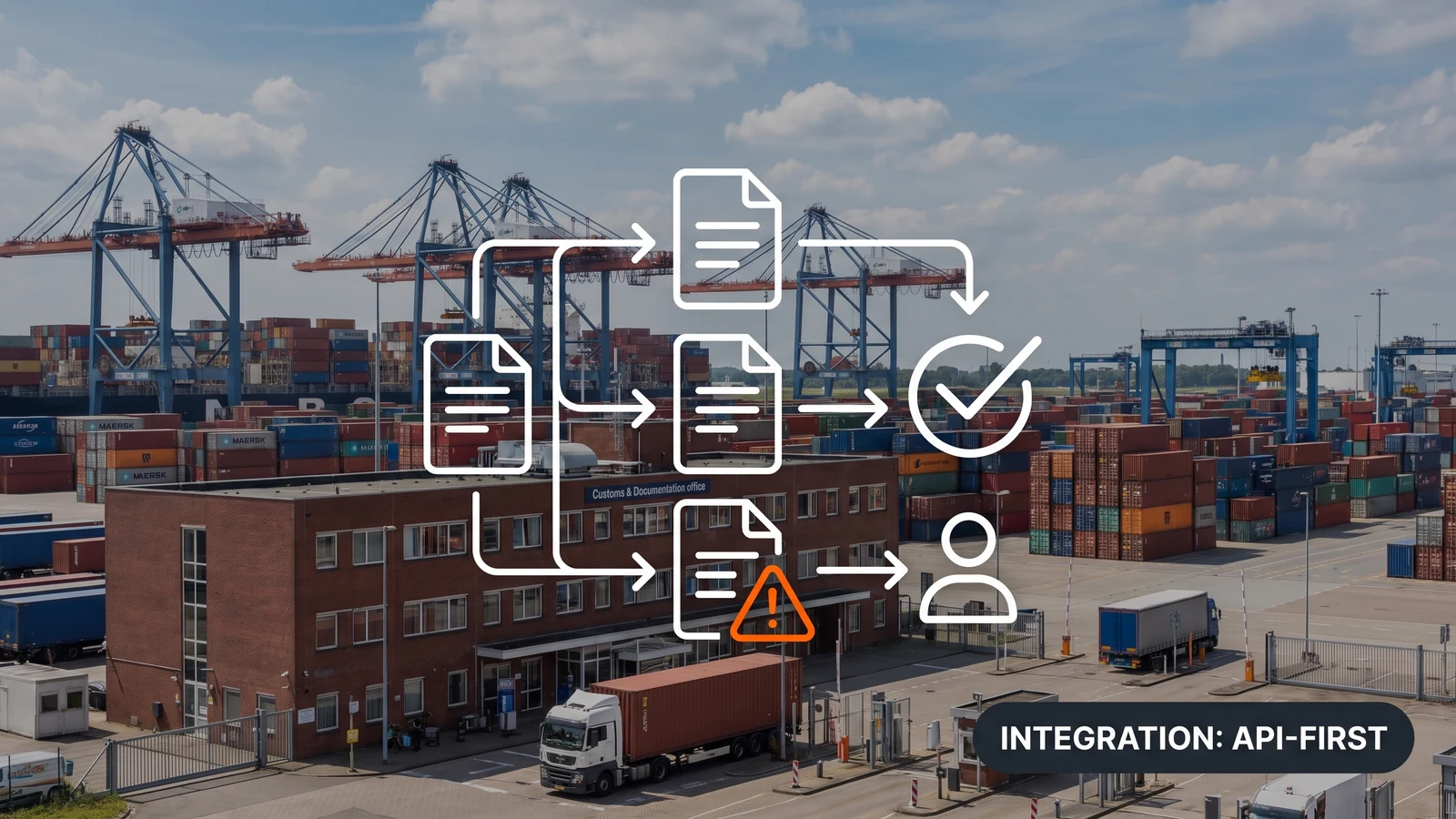
Documents become structured cases
Incoming manifests, declarations, and compliance documents are turned into structured cases automatically, checked against the booking and prior filings.
Connected to port and customs systems
API-first integration connects the agent to the terminal, customs, and document-management systems already in use, rather than requiring a separate portal.
Discrepancies flagged, not silently resolved
When a document doesn't match across systems, the case is routed to the accountable person with the discrepancy identified — not auto-corrected or silently dropped.
A complete, traceable record
Every filing, check, and correction is logged end to end, producing a compliance record that doesn't need to be reconstructed after the fact.
Automating the cross-checking and re-keying — while still routing every discrepancy to a person — is what keeps a vessel call's paperwork from taking longer than the port call itself.
Other use cases
All use cases
Turning “off sick tonight” into an updated nurse roster
View
Re-planning routes from what drivers actually report
View
A cost contingency you can defend when the risk assessments disagree
ViewReady to optimize your operations?
Talk to our research team about your operational challenge. Receive a tailored technical proposal within 72 hours.